
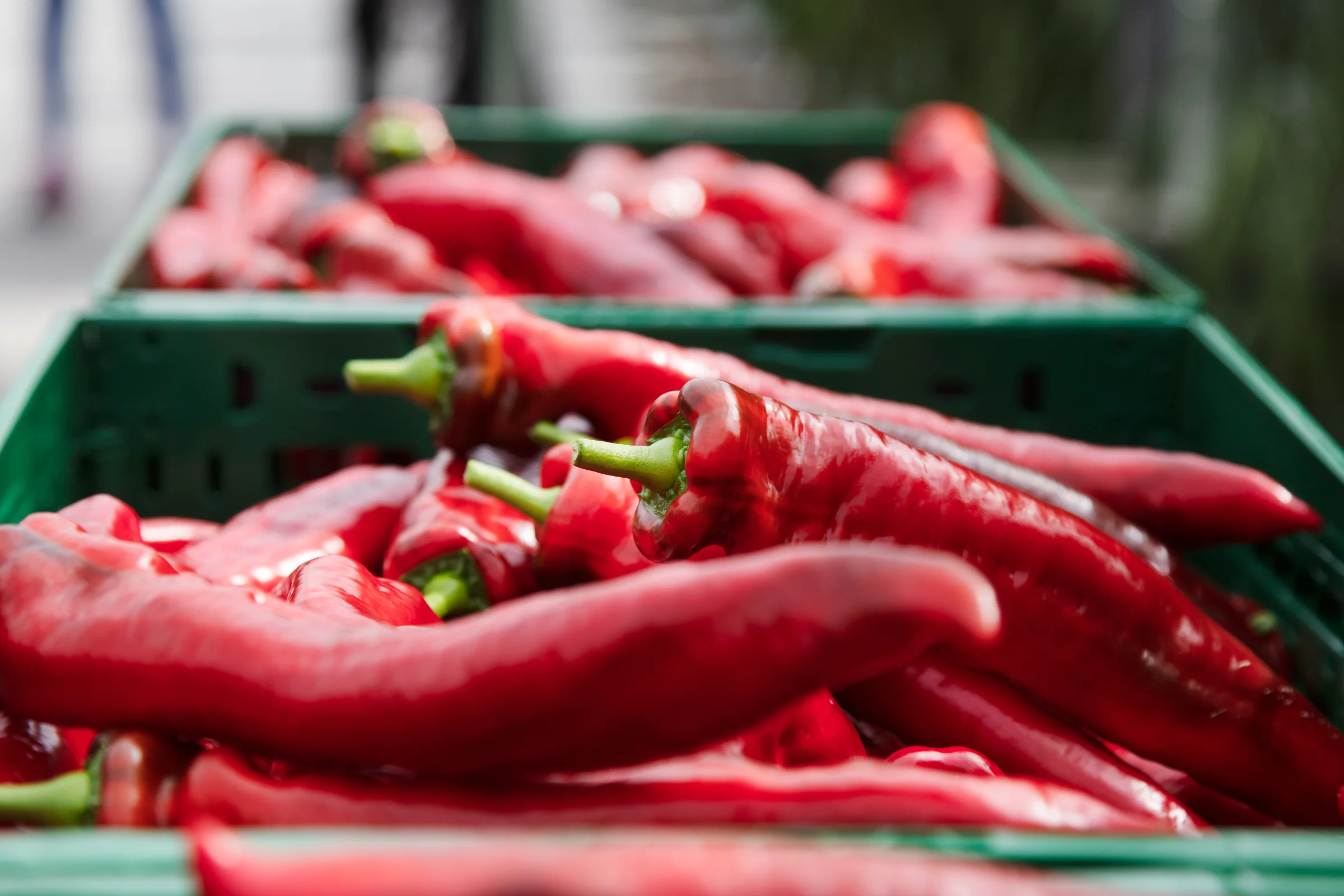
Crops · Fruiting vegetable
Sweet pepper.
Eine lange Kultur, bei der die Farbe das Produkt ist.
Start with the end product
A crop with a market.
Greenhouse sweet pepper cultivation manages a branching crop for a specified fruit shape, colour and grade. Rooted plants are trained into stems; crop balance and ripening determine the pattern of harvest.
Shape and use
Bell, pointed and snack peppers have different pack and handling requirements. Specify shape, size, wall quality and defects with the buyer before selecting a cultivar.
Harvest colour
Green peppers are picked before full colour development. Red, yellow and orange ripe colours depend on the cultivar; they are not a universal sequence through which every pepper passes.
A supply plan with peaks
Developing fruit competes with new flowers for the plant’s resources. Fruit set and harvest can come in waves. A stable climate does not by itself create an identical weekly output.
Climate and season
Start with the growing conditions.
Choose the intended harvest period and location before deciding on heating, screens, ventilation or lighting.
Light and crop balance
Leaf area supplies the developing fruit. Fruit load, pruning and the light available affect the next set. More stems can also mean a denser canopy, so a higher count is not automatically a better crop.
Flowering and temperature
The conditions around flowering influence fruit set and development. Avoid treating a temperature setpoint as a complete climate strategy: plant temperature, humidity, ventilation and the season interact.
Root-zone stability
Drip delivery, substrate moisture and nutrient management need to support the crop through changing demand. Plant stress and calcium movement are relevant to fruit disorders; simply adding more fertiliser is not a complete response.
A greenhouse changes the growing environment; it does not remove seasonal limits.
How to cultivate
Support the canopy.
Manage the roots.
The training system and root-zone system are separate choices. Match both to the crop and the people who will work with it.
Trained stems on strings
Select leaders from the branching plant and support them with strings. Stem number, pruning and fruit-load decisions belong together. Two rooted plants with two leaders each are four stems, not four plants.
Substrate, drippers and drainage
A common Dutch arrangement uses substrate slabs on cultivation gutters with drip irrigation. The substrate holds the roots, while the gutter carries the growing system and collects drain water. Water reuse requires storage, treatment and nutrient management.
Alternative canopy systems
Supported, less-pruned canopies are used in other protected-growing systems. They require their own row arrangement, access and fruit-quality assessment. A stem count cannot establish the capacity of an unpruned canopy.
Soil-grown and organic routes
A soil-based plan starts with beds, drainage, soil condition and crop history. Soil-grown peppers still need crop support and irrigation management. Organic status depends on the applicable certified production system; it cannot be inferred from the substrate or greenhouse model.
Fruit set and crop protection
Sweet peppers can self-pollinate, but fruit set also depends on viable pollen, growing conditions and crop balance. Where pollinators are used, their management must fit the protection programme. Scouting, hygiene and compatible biological control remain recurring work.
From layout to cultivation
Put the crop into a programme.
Use the selected layout to organise the next decisions. Dates and expected harvest need a crop adviser and a location-specific plan.
Specify the plants
Agree planting material, delivery stage and the nursery programme. Reserve any on-site space before setting the production layout.
Build the canopy
Check roots, irrigation and supports; train the crop for the selected system. A planting date is not the start of saleable harvest.
Manage set and colour
Register crop growth, fruit load and set. Match picking to harvest colour and prepare for peaks in grading and packing.
Prepare the next crop
Include crop removal, cleaning, system checks and replanting. Agree separate compartment programmes where supply needs continuity.
The people and the systems
Make the daily work possible.
Match crop care, harvest and packing capacity to the growing programme.
Build the canopy
Train the selected leaders and manage side shoots and fruit load. The nursery plant specification must fit that stem plan. A stem count is useful for estimating the scope of crop work, not its labour hours.
Cut, grade and pack
Pick to the buyer’s colour and quality specification. Protect fruit from stem punctures and crushing. Fruit that misses the required grade should not be counted as equivalent saleable output.
Move the crop efficiently
Harvest carts, internal transport, sorting and packing can reduce specific handling tasks. Distinguish those operations from automated fruit picking. Packing capacity must be checked against harvest peaks.
Was die zusätzlichen Wochen in die Frucht bringen
Paprika wird vor allem wegen Vitamin C gegessen, und die Frucht trägt es nicht von Anfang an. Sie erreicht zuerst ihre volle Größe und arbeitet dann weiter. In den Wochen, die der Umschlag von Grün zur Reifefarbe braucht, lagern sich Zucker und Vitamin C weiter ein, und eine bis zur Farbe geführte Frucht enthält am Ende weit mehr von beidem als dieselbe Frucht, die früh geschnitten wird. Die Farbe im Regal ist ein Protokoll darüber, wie lange die Pflanze weiterarbeiten durfte.
Diese Wochen sind der Einsatz des Erzeugers. Für die Farbe gehaltene Früchte binden Pflanzenkapazität, Wärme und Licht, die eine grüne Ernte freigegeben hätte; deshalb erzielen die ausgereiften Klassen einen Aufpreis, und deshalb steht das Erntestadium fest, bevor ein Gewächshaus ausgelegt wird.
Kein Stadium verbessert sich nach dem Schnitt. Paprika wird in dem Stadium geerntet, in dem sie gegessen wird, sodass Zeit im Container von der Haltbarkeit abgeht, statt der Frucht etwas hinzuzufügen. Ein Gewächshaus nahe seinem Markt kann die Kultur an der Pflanze halten, bis die Bestellung vorliegt, und in derselben Woche liefern, im Winter ebenso wie im Sommer.
Nährwerte
Paprika, rot, roh
Pro 100 g
- Energie
- 26 kcal
- Fett
- 0.3 g
- Kohlenhydrate
- 6.03 g
- davon Zucker
- 4.2 g
- Ballaststoffe
- 2.1 g
- Protein
- 0.99 g
- Natrium
- 4 mg
- Kalium
- 211 mg
- Vitamin C
- 127.7 mg
Welche sweet pepper?
Die Handelstypen.
Farbe, Größe und Qualität bei der Ernte. Der Handelstyp, den Sie verkaufen, bestimmt Pflanzenlast, Ernterhythmus und das Gewächshaus.
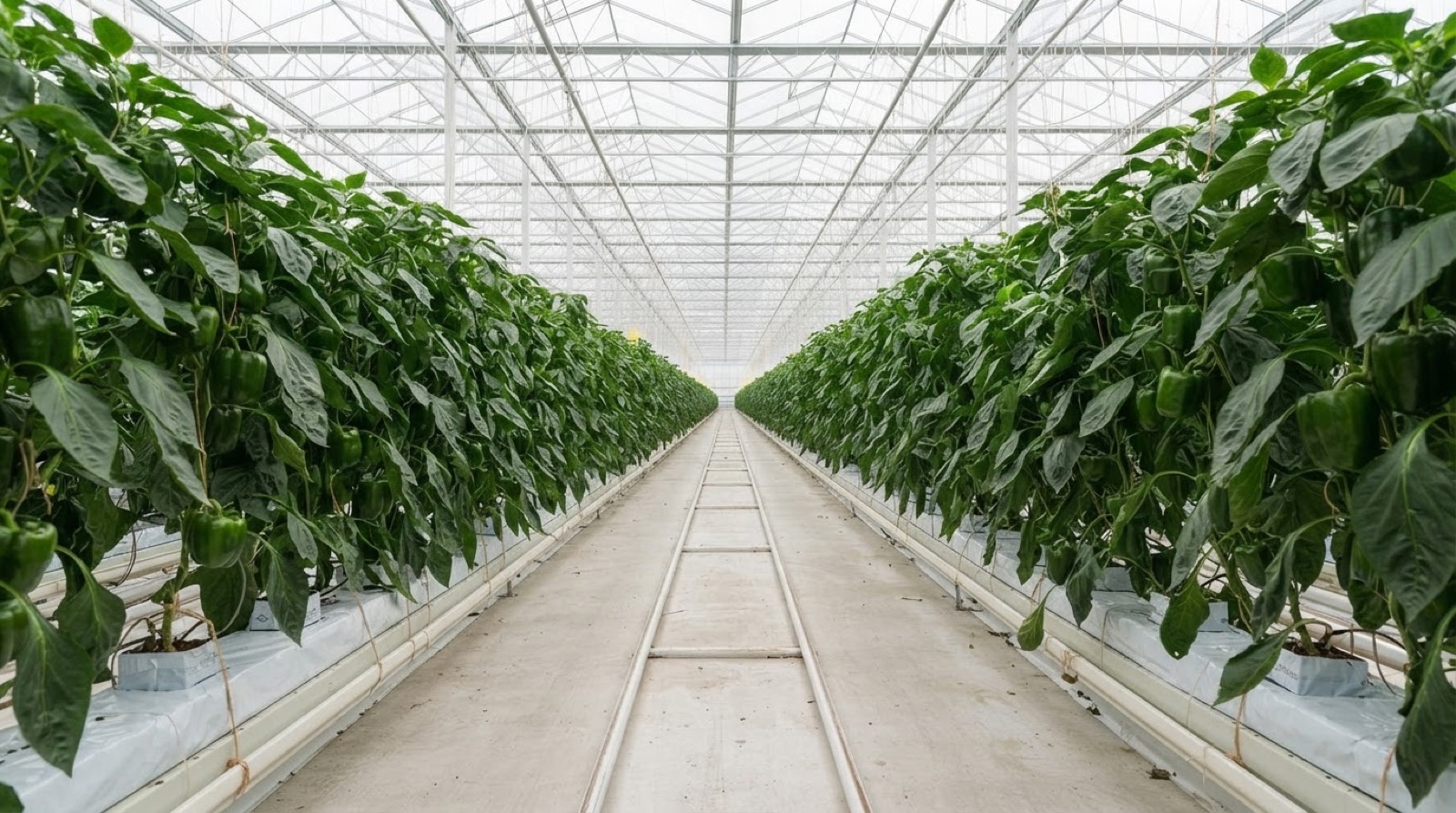
Green Bell Peppers
Green bell pepper is fruit picked before it colours, a harvest stage rather than a colour genotype.
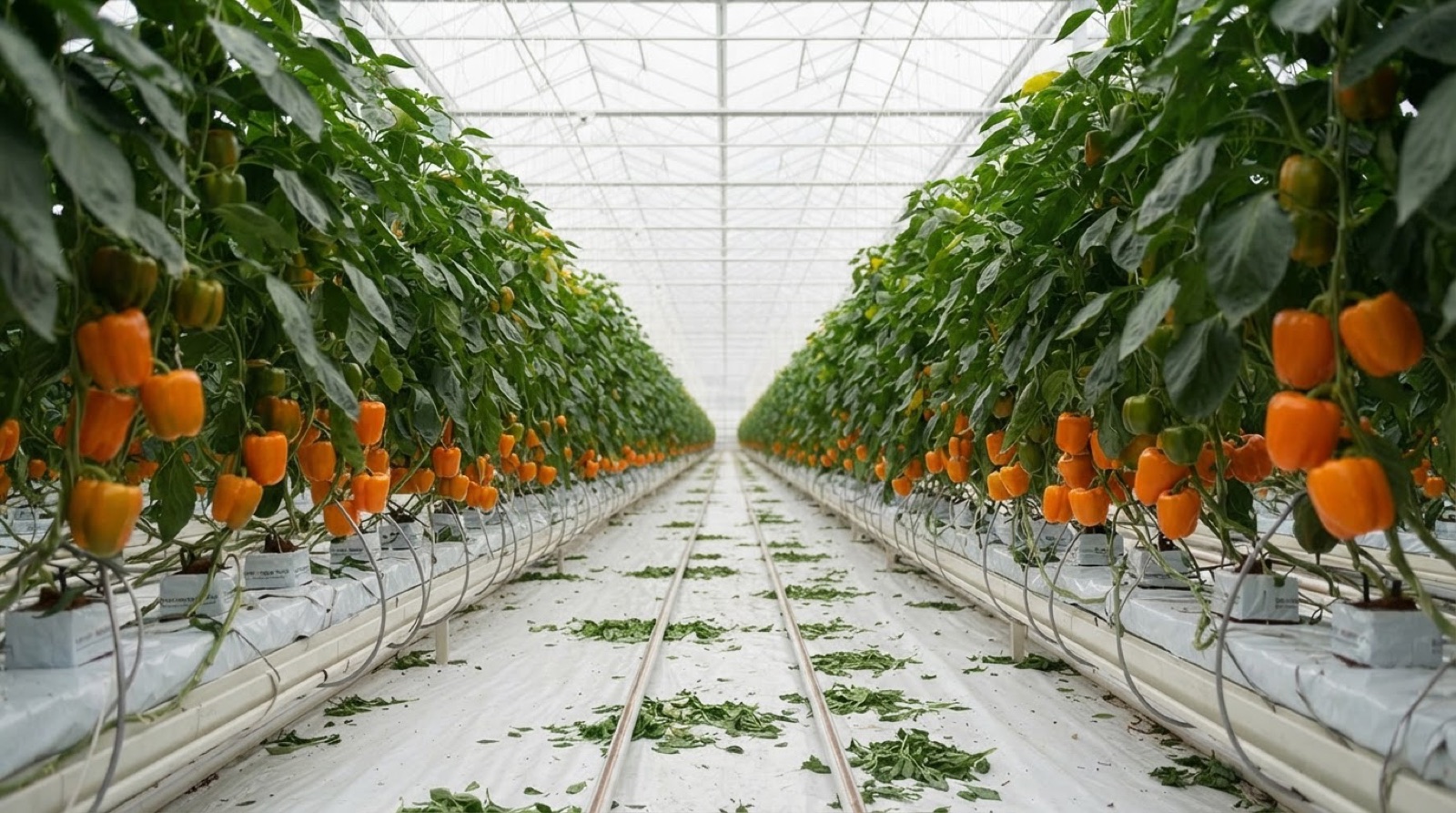
Orange Bell Peppers
Orange bell pepper is its own genotype class with its own cultivars, not a red pepper picked at a different moment.
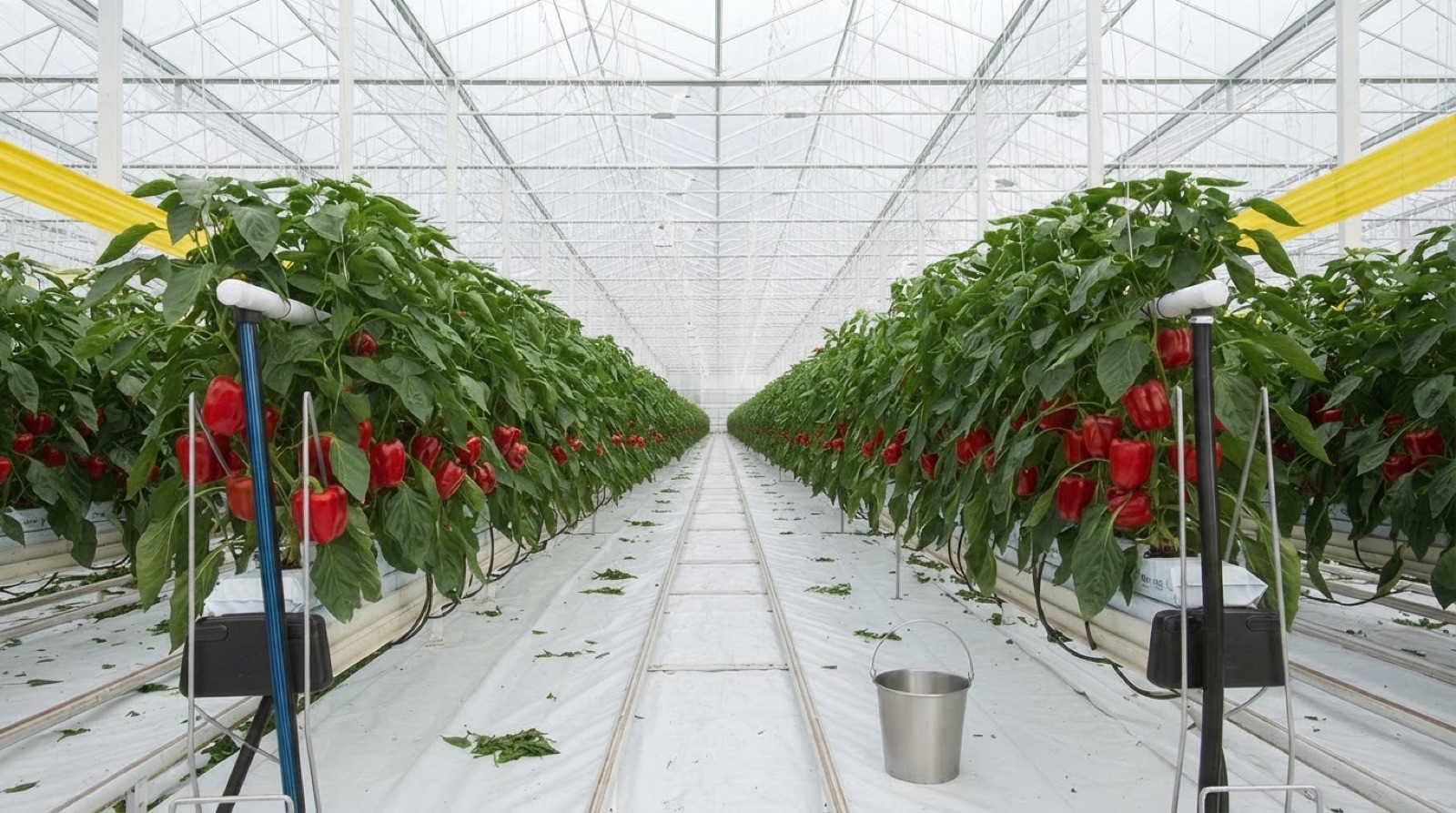
Red Bell Peppers
Red bell pepper is the reference block pepper of Dutch production, carried on the plant until it colours fully.
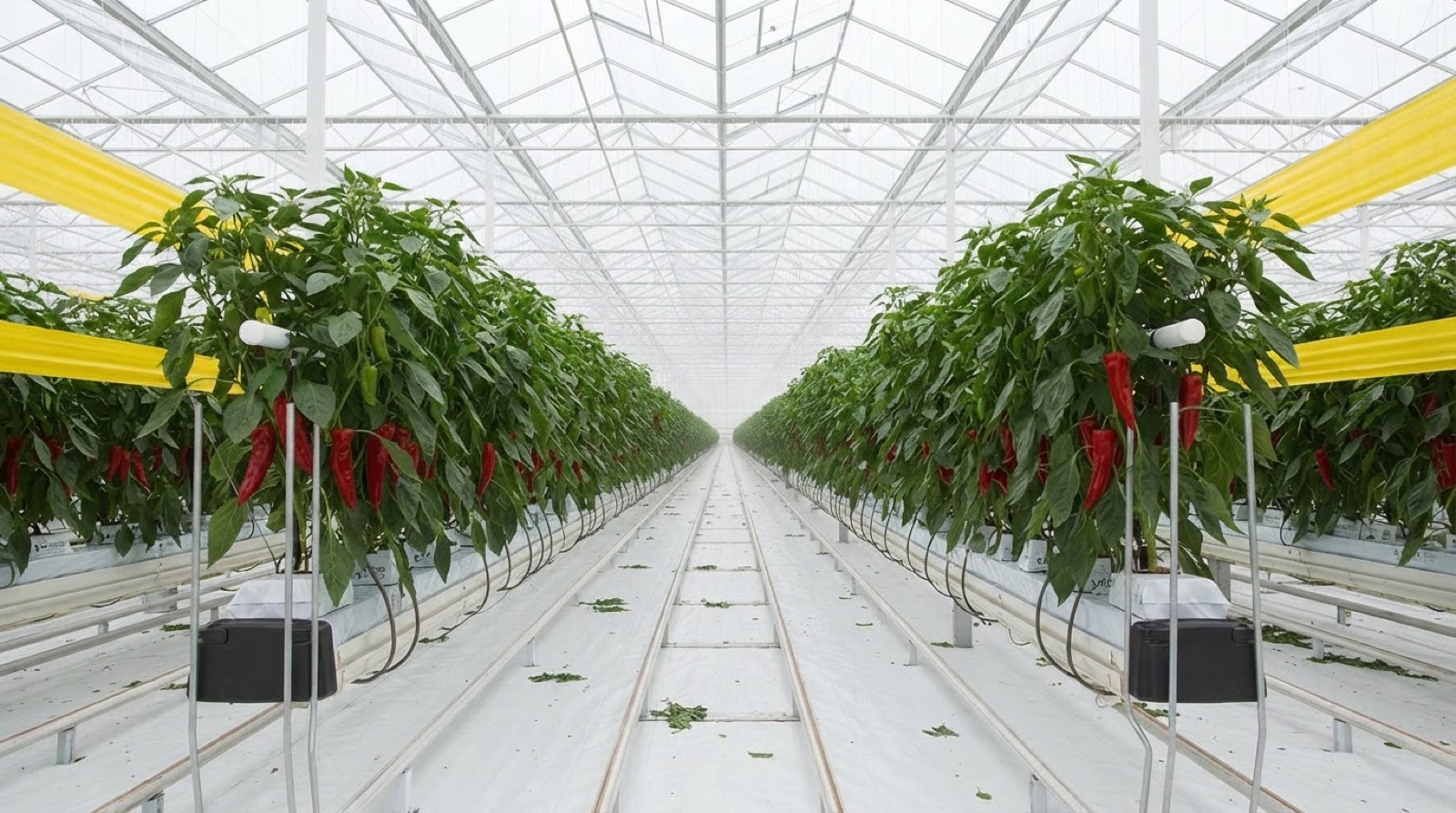
Red Pointed Peppers
Red pointed pepper is a conical, elongated sweet pepper sold for its sweetness and for roasting and grilling.
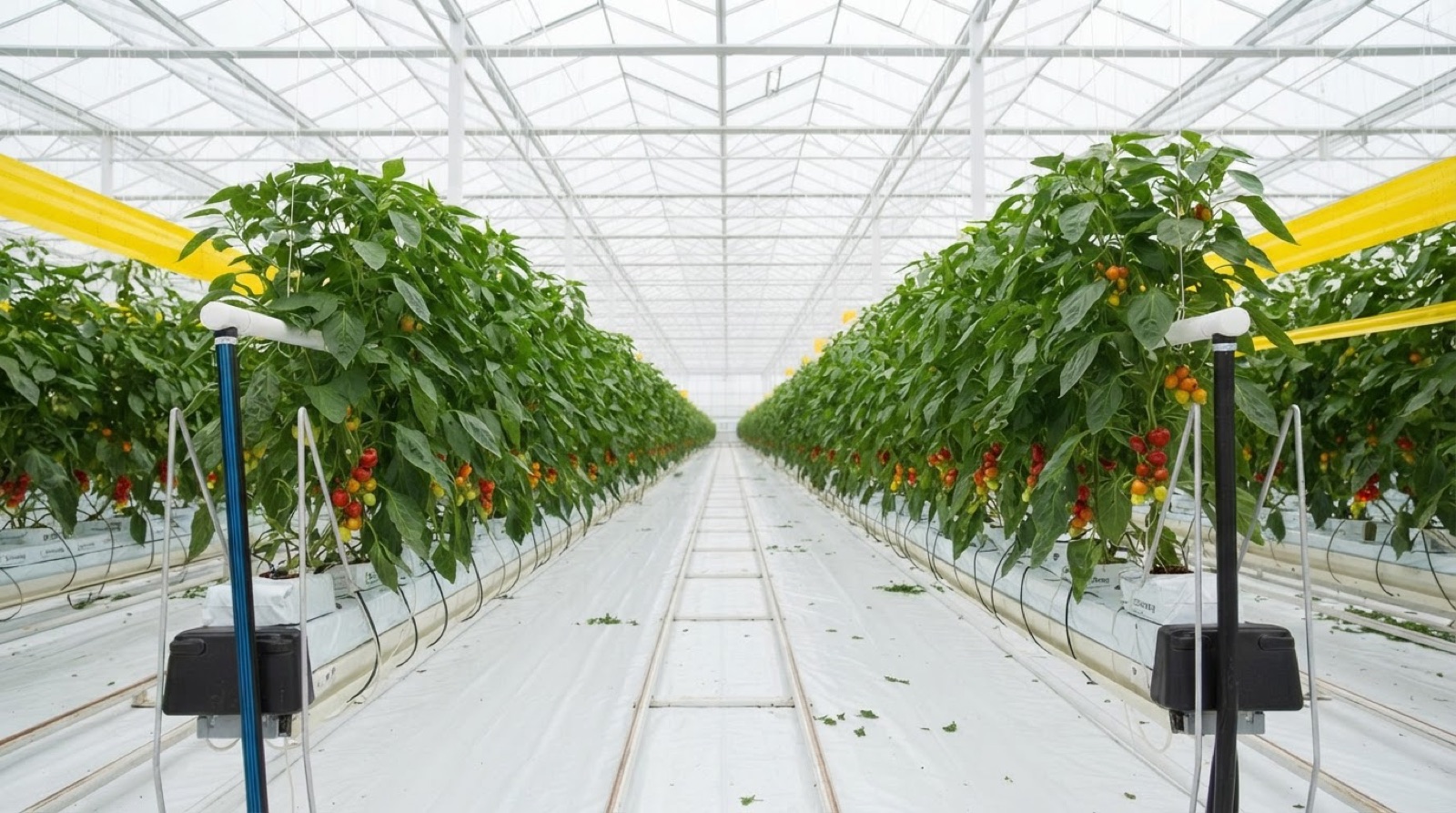
Snack Peppers
Snack pepper is a market and pack idea more than a defined botanical type: small sweet peppers sold in mixed-colour punnets to be eaten whole.
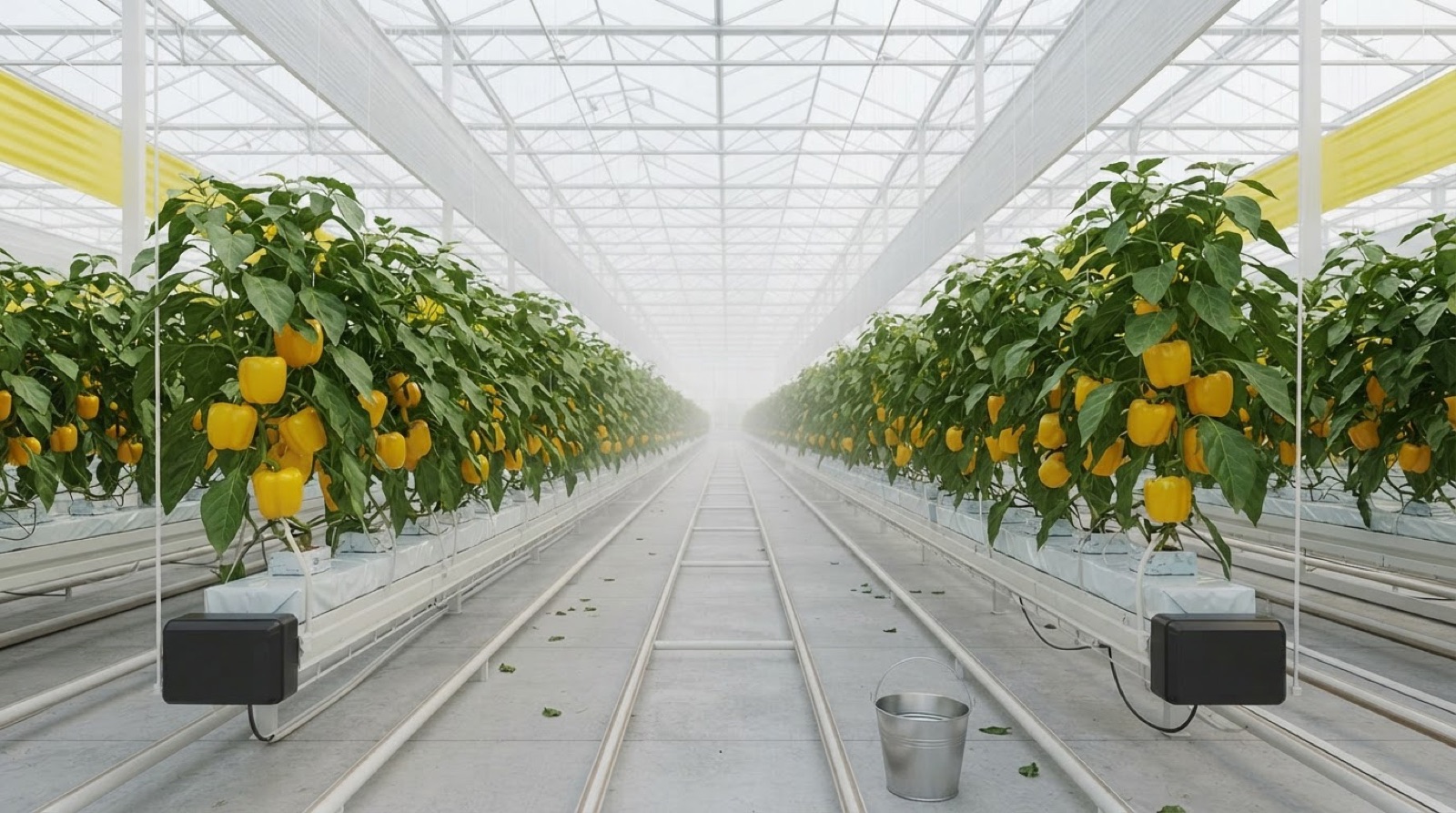
Yellow Bell Peppers
Yellow bell pepper is its own genotype class with its own cultivars, not a red pepper picked at a different moment.
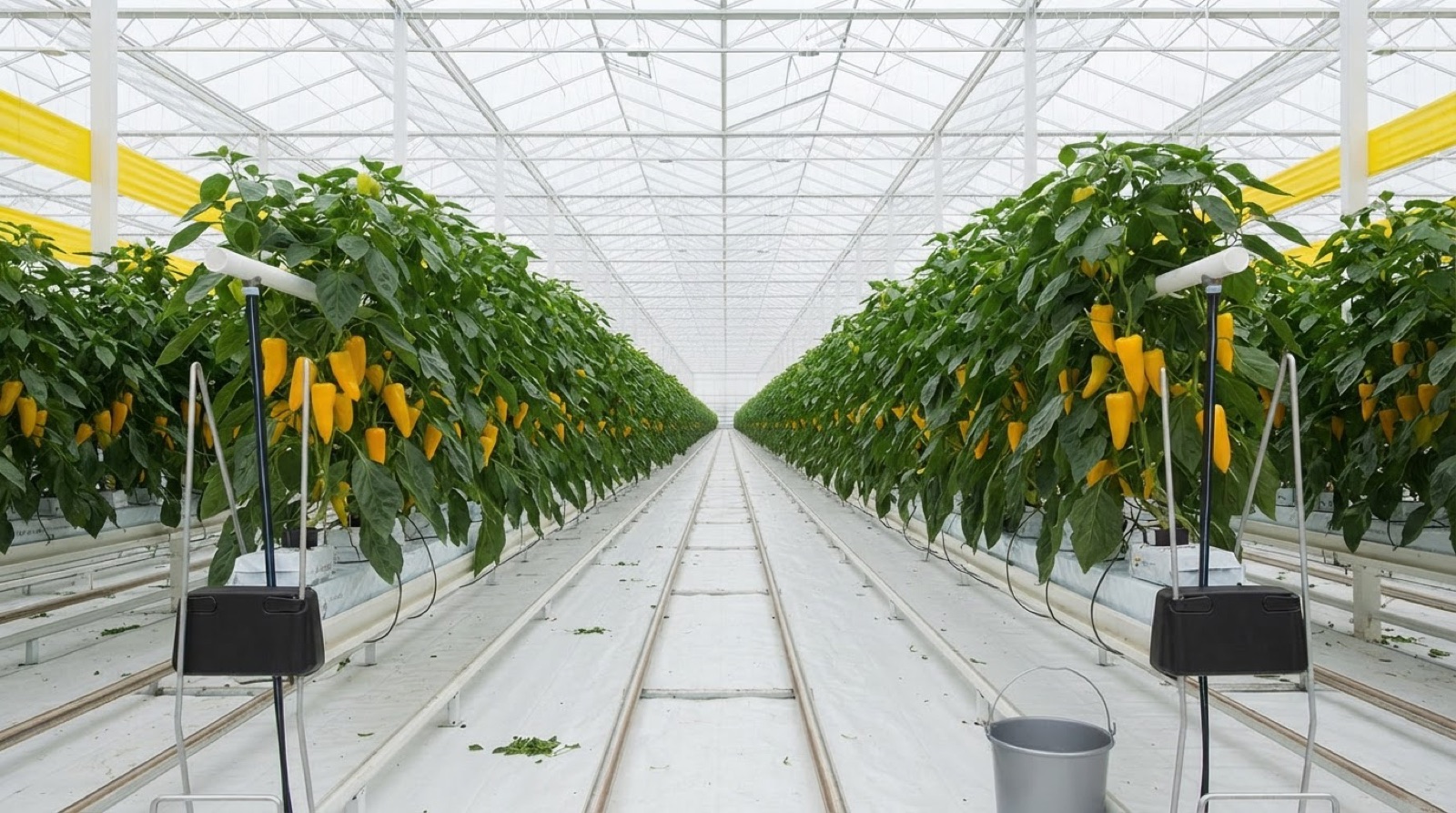
Yellow Pointed Peppers
Yellow pointed pepper is the yellow-ripening conical sweet pepper, distinct from both the yellow block pepper and the red pointed type.
Paprika ist eine Langzeitkultur, die einmal gepflanzt und über den größten Teil des Jahres geführt wird, und ihre Wirtschaftlichkeit hängt an der Reifefarbe. Eine grün geerntete Frucht und eine bis Rot geführte Frucht stammen von derselben Pflanze, die unterschiedlich viel Arbeit leistet, und die zusätzlichen Wochen an der Pflanze werden mit Licht, Wärme und Früchten bezahlt, die früher hätten geerntet werden können. Die Wahl des Erntestadiums ist daher eine kaufmännische Entscheidung, die vor der Auslegung des Gewächshauses fällt, und keine Erntepräferenz, die sich später ergibt.
Was die Kultur braucht
Die Pflanze wächst auf Substrat und wird am Hochdraht geführt, mit langsamerem Fruchtansatz und schwererer Frucht als Gurke. Sie reagiert empfindlich auf das Gleichgewicht zwischen vegetativem und generativem Wachstum, und sie antwortet auf dieses Gleichgewicht über Wochen statt über Tage. Ein Klimasystem, das ein stetiges Verhältnis zwischen Temperatur und Licht hält, hält auch einen stetigen Fruchtansatz; eines, das schwankt, bringt eine Kultur hervor, die schubweise trägt und dann stockt.
Was die Sorten unterscheidet
Die Reifefarbe ist eine genetische Eigenschaft der Sorte und keine Entscheidung bei der Ernte, und genau diese Unterscheidung geht in der Planung am häufigsten verloren. Rot, Gelb und Orange sind eigene Genotypklassen mit eigenen Sorten. Grün ist ein Erntestadium, und eine grün geerntete Kultur hat weiterhin eine genetische Reifefarbe, die gesondert erfasst werden muss. Spitzpaprika ist wiederum ein anderes Produkt, mit eigener Fruchtmasse und eigener Pflanzenarchitektur, und wird entsprechend gestellt und gestützt.
DutchGreenhouses® legt Konstruktion, Klima, Schirmung und Bewässerung auf den Paprikatyp, sein Erntestadium und das lokale Klima aus, damit das Gewächshaus die verkaufte Farbe trägt und nicht Paprika im Allgemeinen. Nehmen Sie Kontakt auf, um ein Paprika-Gewächshaus zu planen.
Das Gewächshaus hinter paprika
Paprika unter Glas.
Gestützte Substratkultur
Pflanzenlast, Licht im Bestand und Klimaregelung tragen eine lange Kultur mit wiederholtem Pflücken.
Farbe, Größe und Qualität bei der Ernte.
Gestützte Substratkultur.
Farb- und Größenklassen mit Ihrem Markt und Ernteplan verbinden.
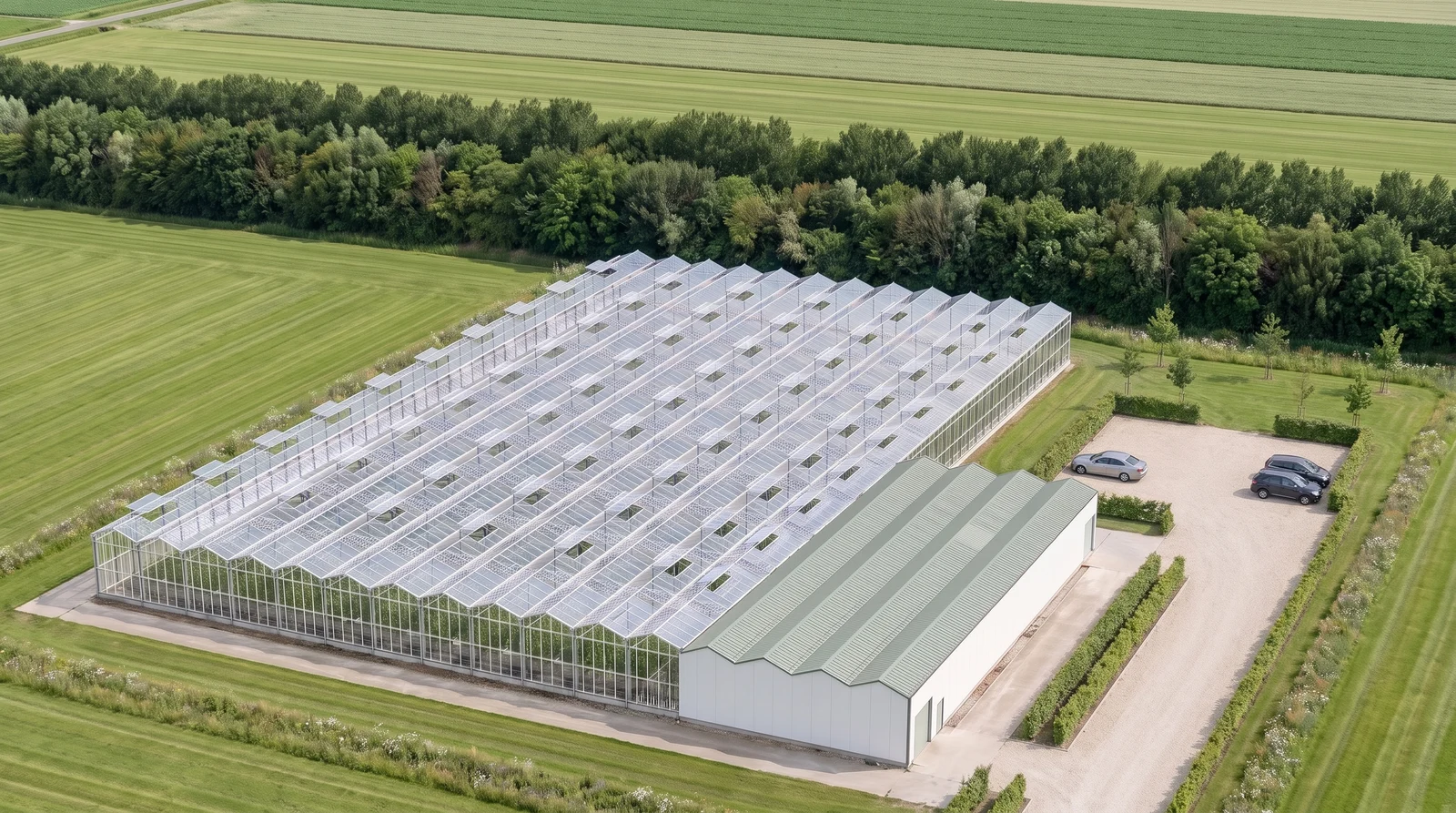
Expert Hydroponic Greenhouse Series
Eine definierte Konstruktion für die kommerzielle Hydroponik. Die Kultur bestimmt Kultursystem, Klimastrategie und Ernteanordnung.
½ acre1 acre2 acresEntdecken Expert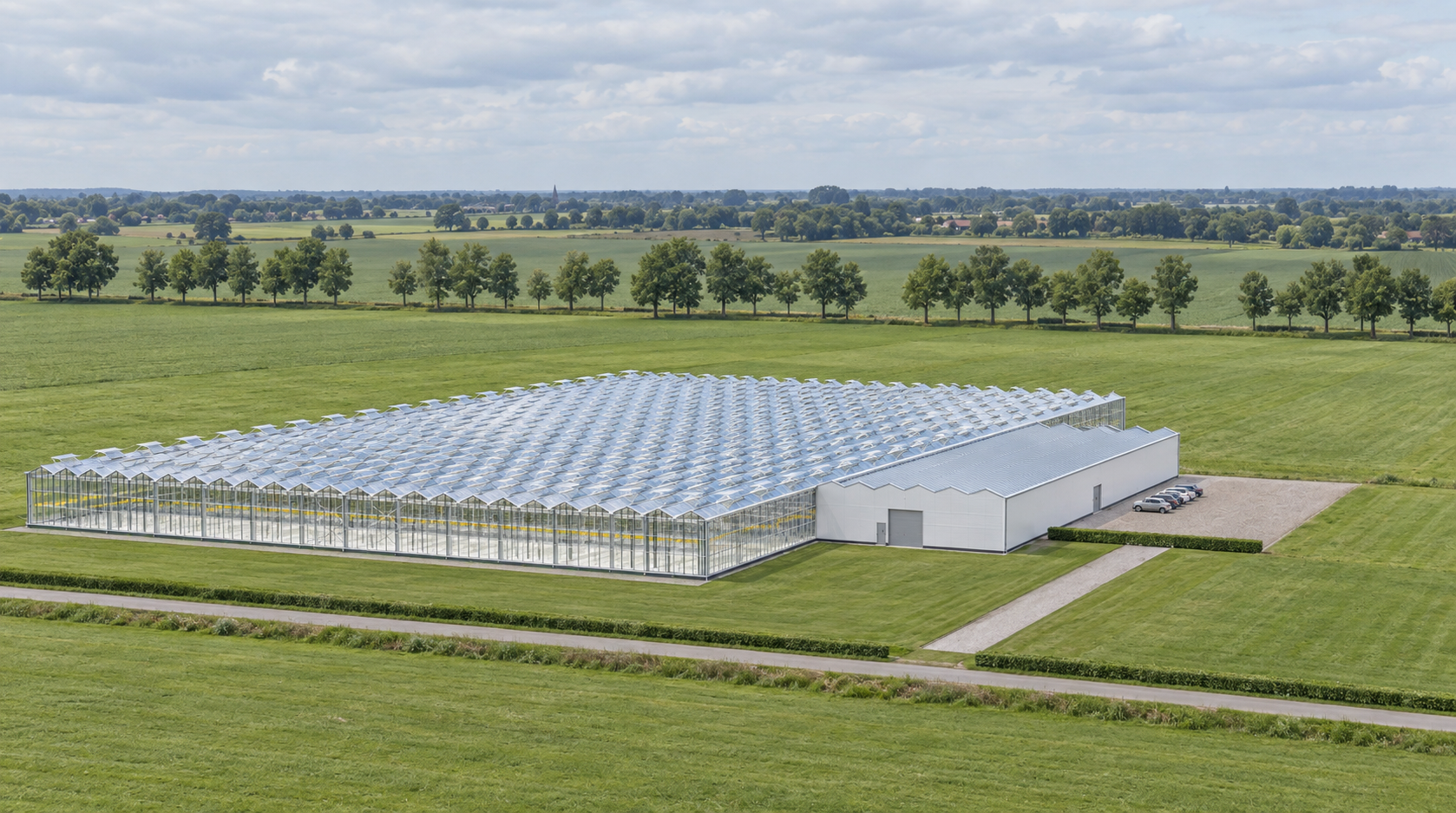
Plus Hydroponic Greenhouse Series
Unsere größte Standardserie. Die größere Kulturfläche auf Kulturbedarf, Arbeitskräfte, Versorgung und den Markt abstimmen, den Sie beliefern wollen.
2 acres4 acres8 acresEntdecken Plus4,032 m²43,400 sq ft Kulturfläche sind der übliche Ausgangspunkt für einen Produktionsplan mit paprika (GrowPro Expert 1 acre). Alle neun Modelle vergleichen
Bringen Sie Ihre nächste Ernte
unter Glas.
Ihre Kultur, Ihr Standort und die Menge, die Sie verkaufen wollen. Finden wir das passende Gewächshaus und die passenden Systeme.
Ein individuelles Gewächshaus gesucht?GrowPro Expert
Wir können auch für eine andere Kultur oder ein gemischtes Anbauprogramm planen.
Über Ihr Projekt sprechen Weiter zum Kontaktformular. Unverbindlich.Lesenswertes, das Sie interessieren könnte

Grow Like a Pro: Starting Smart, Growing Strong
How Grow Like a Pro combines smart farming, CEA technology and local partnerships for eco-friendly, profitable, pesticide-free greenhouse…
Artikel lesen
Maryland Cannabis Greenhouse: Year One
One year on: how the Maryland cannabis greenhouse, paired with an adjacent indoor facility, cut the energy bill and lifted both yields and…
Artikel lesen
The Case for a College Greenhouse
Why a college greenhouse belongs in the curriculum: teaching science, craftsmanship, business logic and sustainability, and preparing…
Artikel lesen
The Case for a High School Greenhouse
Why every high school greenhouse matters: how it makes STEM tangible, builds responsibility and teamwork, and helps students discover their…
Artikel lesen
Greenhouses in Education: The Case for Schools
Greenhouses in education reconnect students to reality — the full case for why every school, high school, college and trade program should…
Artikel lesen
The Origins of Greenhouse Horticulture: My Backyard
A tour through greenhouse horticulture history: from 19th-century Westland fruit walls to the “City of Glass” and today’s international…
Artikel lesen