
Crops · Fruiting vegetable
Strawberry.
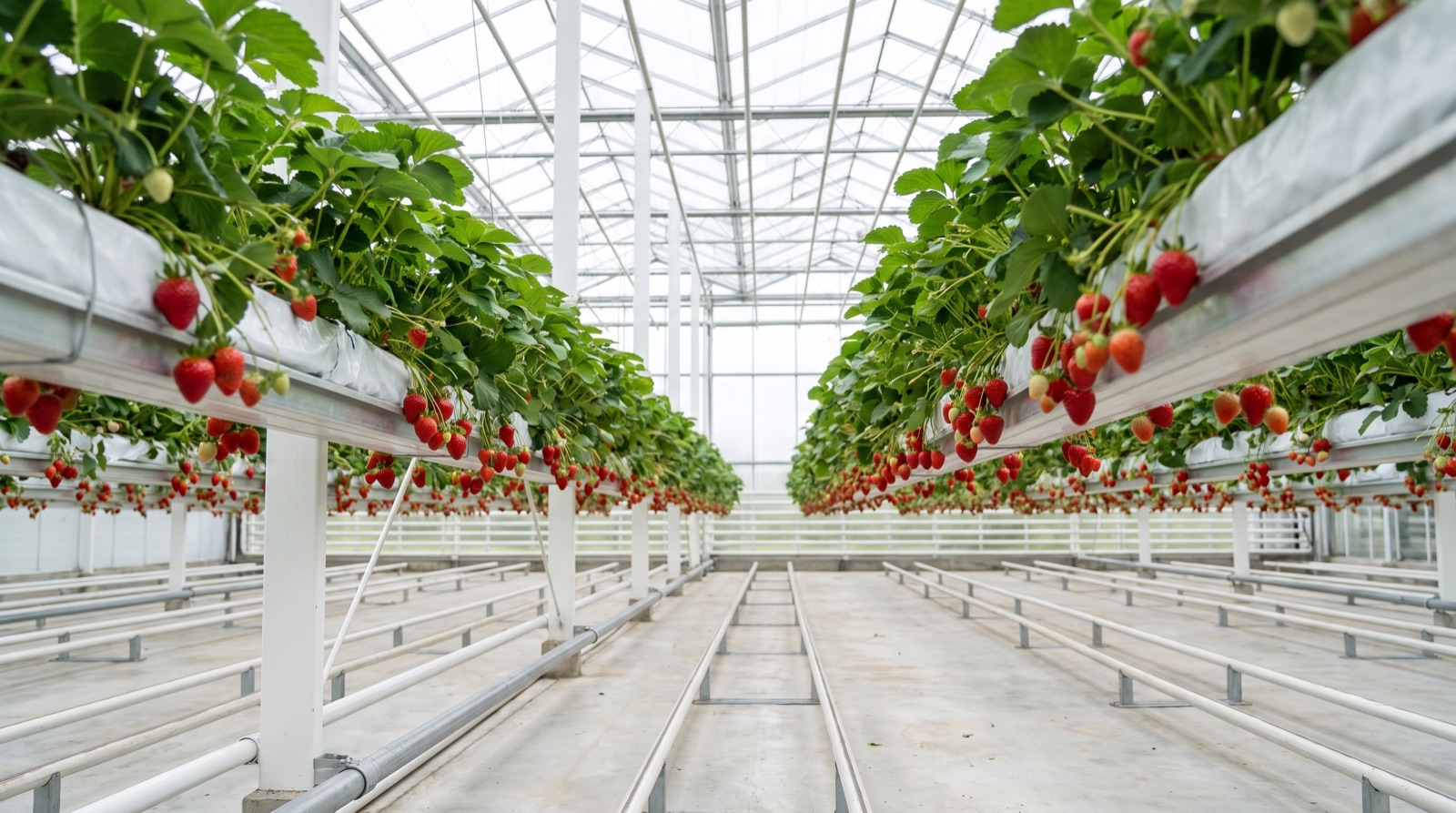
Beerenobst in Arbeitshöhe, auf Rinnen, die rezirkulieren.
Start with the end product
Fruit worth picking.
A market ready for it.
The buyer specification comes before a growing system: fruit quality, pack format and the delivery window determine what the crop must achieve.
Flavour and appearance
Agree ripeness, flavour, colour, shape and acceptable defects. Fruit that misses the required grade is not equivalent to saleable harvest.
Firmness and handling
Match picking maturity and firmness to the route to market. Pack design, handling and cooling are part of preserving the fruit after harvest.
A season the operation can supply
A short selling window and an extended supply programme create different planting and workload plans. Start with the required delivery period, then test its cultivation feasibility.
The crop programme
A flowering type
is not a harvest calendar.
Plant preparation and the growing strategy determine how the chosen type is used. These programme descriptions need local dates and cultivar-specific management.
Fresh planting · verse teelt
A fresh planting programme starts with a new crop of prepared plants. Plant availability, chilling history and greenhouse conditions determine when it can enter production.
Overwintered crop · doorteelt
An autumn crop can be retained through winter for a spring harvest. This is a crop strategy, not the same thing as an everbearing variety. Rest, regrowth and separate harvest periods belong in the schedule.
Repeat-fruiting programme
Everbearing types form new flower trusses during production, subject to cultivar and growing conditions. Repeated harvest can still have peaks and gaps. Lighting and climate control need to match the intended season.
A business may combine programmes across compartments or planting dates to extend supply. That does not mean every plant produces continuously.
Climate and season
The season is part
of the design.
Choose the intended harvest period before specifying the climate systems. A greenhouse changes the growing environment; it does not remove seasonal limits.
Light and crop balance
Available light changes through the season. Flowering, leaf growth and developing fruit place different demands on the crop. Plant preparation and crop load need to fit the light available during production.
Temperature and flowering
Flower initiation responds to temperature and day length in a cultivar-dependent way. Seasonal and repeat-fruiting labels alone are insufficient for a crop schedule. Excessive warmth also affects fruit quality.
Humidity and water
Humidity control, air movement and crop hygiene help manage the conditions for disease. Heating, ventilation and screens interact with crop temperature, moisture and energy use. Root-zone water management remains a separate task.
How glasshouse strawberries are grown
A gutter supports the crop.
The substrate holds the roots.
In a container-based system, rigid plastic growing troughs sit on suspended or supported gutters. Drippers supply the substrate; the gutter collects the drainage.
Suspended gutter
The greenhouse carries the hanging system. A supported tabletop is another arrangement. Loads and working height belong in the structural design.
Rigid plastic trough
The growing container, or bak, holds the substrate. Container feet, drainage openings and the gutter profile must fit together.
Drip-fed substrate
A drip line delivers nutrient solution through emitters. Excess solution drains from the container into the collection system.
The work behind the fruit
Organise for the picking
day, not just the planting day.
A useful growing plan connects crop care to the movement of saleable fruit.
Prepare and establish
Mother plants supply runner tips, which are rooted and raised into planting material. Nursery irrigation and spacing differ from the fruiting crop. Agree plant format, preparation, chilling or storage history and delivery condition.
Care and pick
Plant establishment, runner and leaf management, crop observation and repeated picking each need an operating routine. Plan access for workers and collection equipment before selecting gutter height or support.
Grade, cool and deliver
Grade fruit against the buyer’s specification and avoid injury during handling. Prompt cooling and a continuous cold chain protect quality. Peak picking, packing and cooling demand should be planned together.
Automation should address a defined task: irrigation control, internal transport or handling. Labour savings and staffing levels need measured work rates from the intended operation.
Reif gepflückt, oder nicht wert, gepflückt zu werden
Die Erdbeere trägt mehr Vitamin C als die meisten Früchte im Obstregal, und fast alles davon wird in den letzten Tagen an der Pflanze eingelagert. Ebenso der Zucker, ebenso das Aroma, ebenso die Farbe, die die Frucht kaufenswert aussehen lässt. Eine Erdbeere wird nach dem Pflücken nicht besser. Sie verbraucht nur, was sie schon hat.
Damit bleibt weit entfernter Frucht eine Möglichkeit: früh und fest pflücken. Frucht, die vor der Reife geschnitten wird, übersteht den Transport und kommt rot an, weil die Schale ausfärbt, ob das Fruchtfleisch fertig wird oder nicht. Was nie ankommt, sind der Geschmack und der Vitamingehalt, die die letzten Tage hinzugefügt hätten. Die Beere gehört zudem zum Verderblichsten in der Frischekette, sodass alles, was nicht schnell gegessen wird, weggeworfen wird.
Ein Gewächshaus nahe am Markt löst beide Probleme zugleich. Die Frucht kann bei voller Reife gepflückt werden, weil der Weg kurz ist, und sie kann in Monaten gepflückt werden, in denen das Freiland leer ist. Deshalb gibt es die geschützte Erdbeere als Handelskultur, und sie ist im gesamten Kultursortiment der deutlichste Fall für den Anbau nahe bei den Menschen, die sie essen.
Nährwerte
Erdbeeren, roh
Pro 100 g
- Energie
- 32 kcal
- Fett
- 0.3 g
- Kohlenhydrate
- 7.68 g
- davon Zucker
- 4.89 g
- Ballaststoffe
- 2 g
- Protein
- 0.67 g
- Natrium
- 1 mg
- Kalium
- 153 mg
- Vitamin C
- 58.8 mg
Welche strawberry?
Die Handelstypen.
Frische Früchte im richtigen Marktfenster. Der Handelstyp, den Sie verkaufen, bestimmt Pflanzenlast, Ernterhythmus und das Gewächshaus.
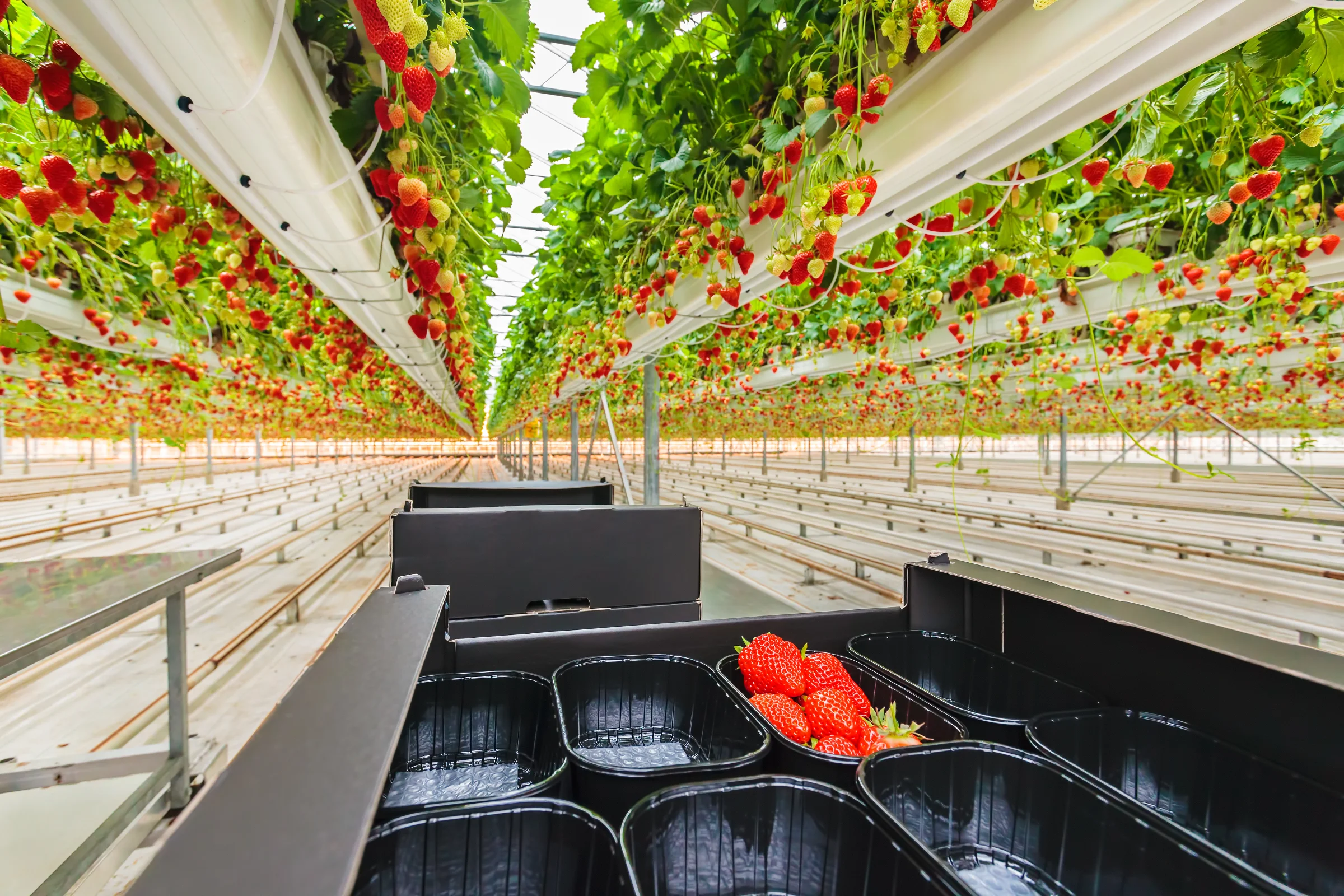
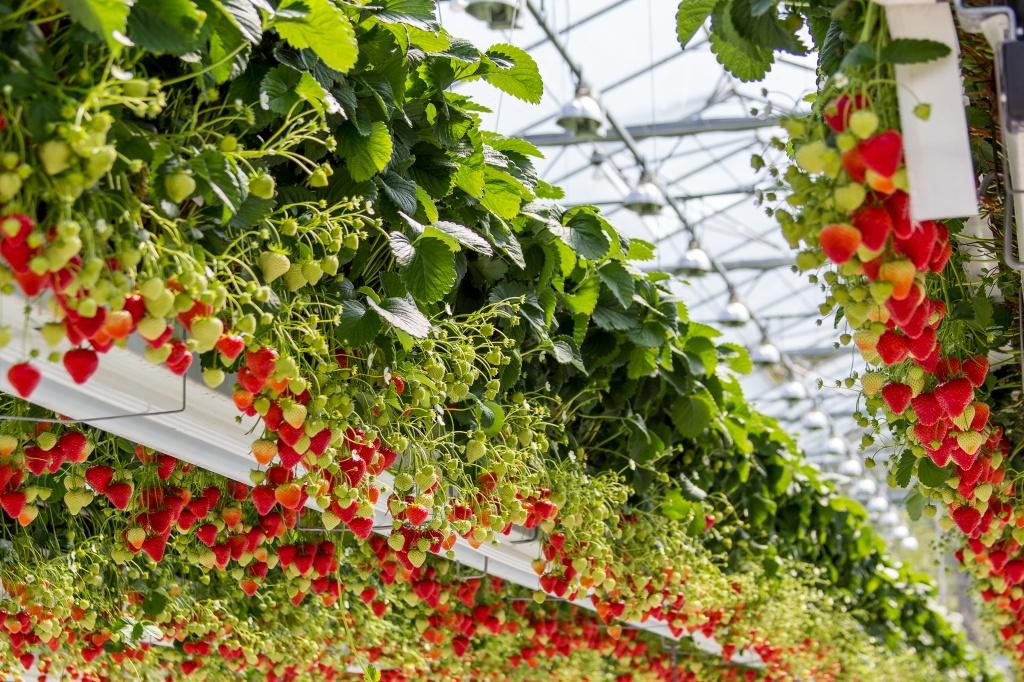
Die Erdbeere unter Glas ist etwas anderes als die Erdbeere im Feld: Die Kultur wächst auf Hängerinnen in Arbeitshöhe, wird im Stehen gepflückt und in Wochen an den Markt geliefert, die das Freiland nicht erreicht. Der Aufpreis liegt in dieser Zeitlage und in der gleichbleibenden Klasse. Es ist zudem eine arbeitsintensive Kultur, und das Rinnensystem gibt es ebenso sehr, um das Pflücken durchhaltbar zu machen, wie um die Wurzelzone zu steuern.
Was die Kultur braucht
Der Anbau auf Hängerinnen mit Substrat bringt die Wurzelzone vollständig unter Kontrolle und erlaubt es, das Drainwasser zu sammeln und zu rezirkulieren. Das zählt bei einer Kultur, die so empfindlich auf Salz und auf die Wasserverfügbarkeit während der Fruchtbildung reagiert, und es ist der Grund, warum eine geschützte Erdbeerkultur die Qualität über eine lange Pflückperiode hält, statt in einem Schub zu tragen und dann abzufallen.
Remontierend oder einmaltragend
Die beiden Handelssysteme trennt, wodurch die Pflanze zur Blüte angeregt wird. Remontierende Typen tragen über einen längeren Zeitraum und bilden die Grundlage der niederländischen Frischkultur unter Glas. Einmaltragende Typen folgen einem Kurztagsrhythmus und liefern eine konzentrierte Ernte in ein festgelegtes Fenster. Jedes wird als eigene Kultur geplant, denn ein durchgehender Pflückrhythmus und eine Spitzenwoche verlangen Unterschiedliches von Arbeit, Kühlung und Packkapazität.
DutchGreenhouses® spezifiziert Konstruktion, Klima, Schirmung und Bewässerung um das Erdbeersystem, sein Pflückfenster und das örtliche Klima herum, sodass die Fruchtqualität über die gesamte Periode hält und nicht nur im ersten Schub. Nehmen Sie Kontakt auf, um ein Erdbeer-Gewächshaus zu planen.
Das Gewächshaus hinter erdbeeren
Erdbeeren unter Glas.
Hochgestellte Rinnen mit Substrat
Rinnenanordnung, Pflanzabstand und Pflückwege folgen dem Erntefenster und Ihrem Arbeitsplan.
Frische Früchte im richtigen Marktfenster.
Hochgestellte Rinnen mit Substrat.
Vermarktbare Klasse, Ernteaufwand, Verpackung und Lieferzeit berücksichtigen.
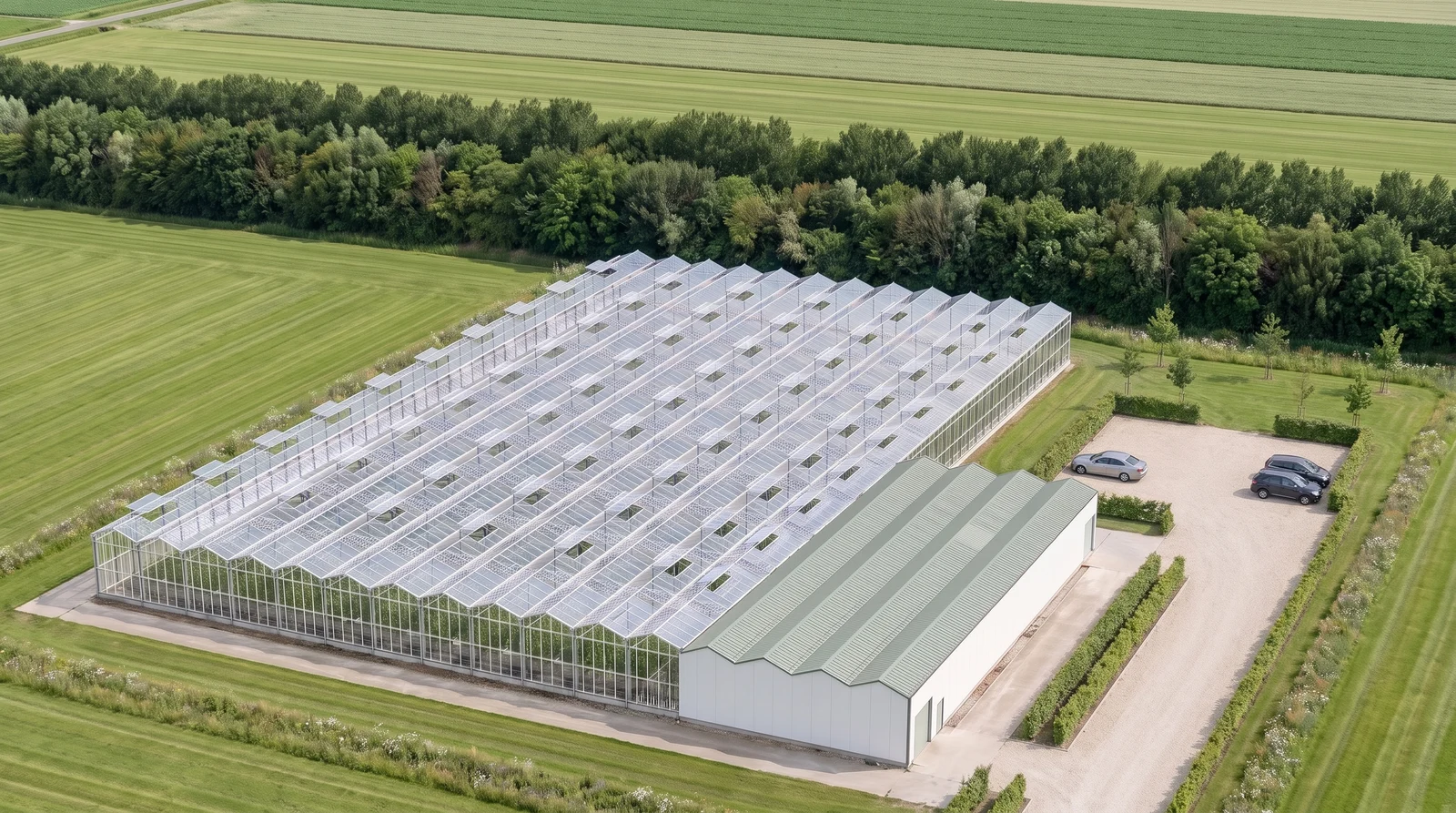
Expert Hydroponic Greenhouse Series
Eine definierte Konstruktion für die kommerzielle Hydroponik. Die Kultur bestimmt Kultursystem, Klimastrategie und Ernteanordnung.
½ acre1 acre2 acresEntdecken Expert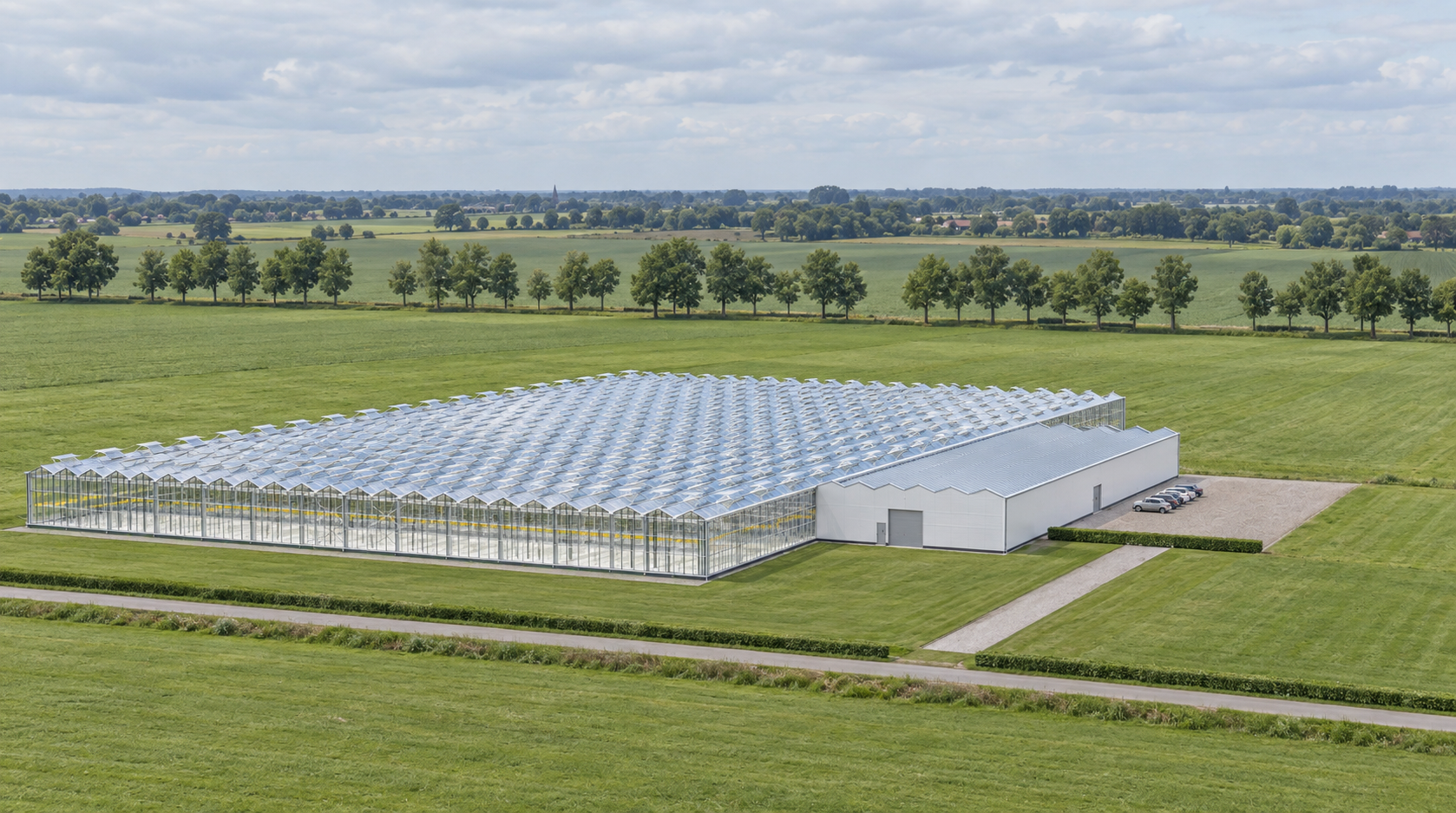
Plus Hydroponic Greenhouse Series
Unsere größte Standardserie. Die größere Kulturfläche auf Kulturbedarf, Arbeitskräfte, Versorgung und den Markt abstimmen, den Sie beliefern wollen.
2 acres4 acres8 acresEntdecken Plus4,032 m²43,400 sq ft Kulturfläche sind der übliche Ausgangspunkt für einen Produktionsplan mit erdbeeren (GrowPro Expert 1 acre). Alle neun Modelle vergleichen
Bringen Sie Ihre nächste Ernte
unter Glas.
Ihre Kultur, Ihr Standort und die Menge, die Sie verkaufen wollen. Finden wir das passende Gewächshaus und die passenden Systeme.
Ein individuelles Gewächshaus gesucht?GrowPro Expert
Wir können auch für eine andere Kultur oder ein gemischtes Anbauprogramm planen.
Über Ihr Projekt sprechen Weiter zum Kontaktformular. Unverbindlich.Lesenswertes, das Sie interessieren könnte

Grow Like a Pro: Starting Smart, Growing Strong
How Grow Like a Pro combines smart farming, CEA technology and local partnerships for eco-friendly, profitable, pesticide-free greenhouse…
Artikel lesen
Maryland Cannabis Greenhouse: Year One
One year on: how the Maryland cannabis greenhouse, paired with an adjacent indoor facility, cut the energy bill and lifted both yields and…
Artikel lesen
The Case for a College Greenhouse
Why a college greenhouse belongs in the curriculum: teaching science, craftsmanship, business logic and sustainability, and preparing…
Artikel lesen
The Case for a High School Greenhouse
Why every high school greenhouse matters: how it makes STEM tangible, builds responsibility and teamwork, and helps students discover their…
Artikel lesen
Greenhouses in Education: The Case for Schools
Greenhouses in education reconnect students to reality — the full case for why every school, high school, college and trade program should…
Artikel lesen
The Origins of Greenhouse Horticulture: My Backyard
A tour through greenhouse horticulture history: from 19th-century Westland fruit walls to the “City of Glass” and today’s international…
Artikel lesen