
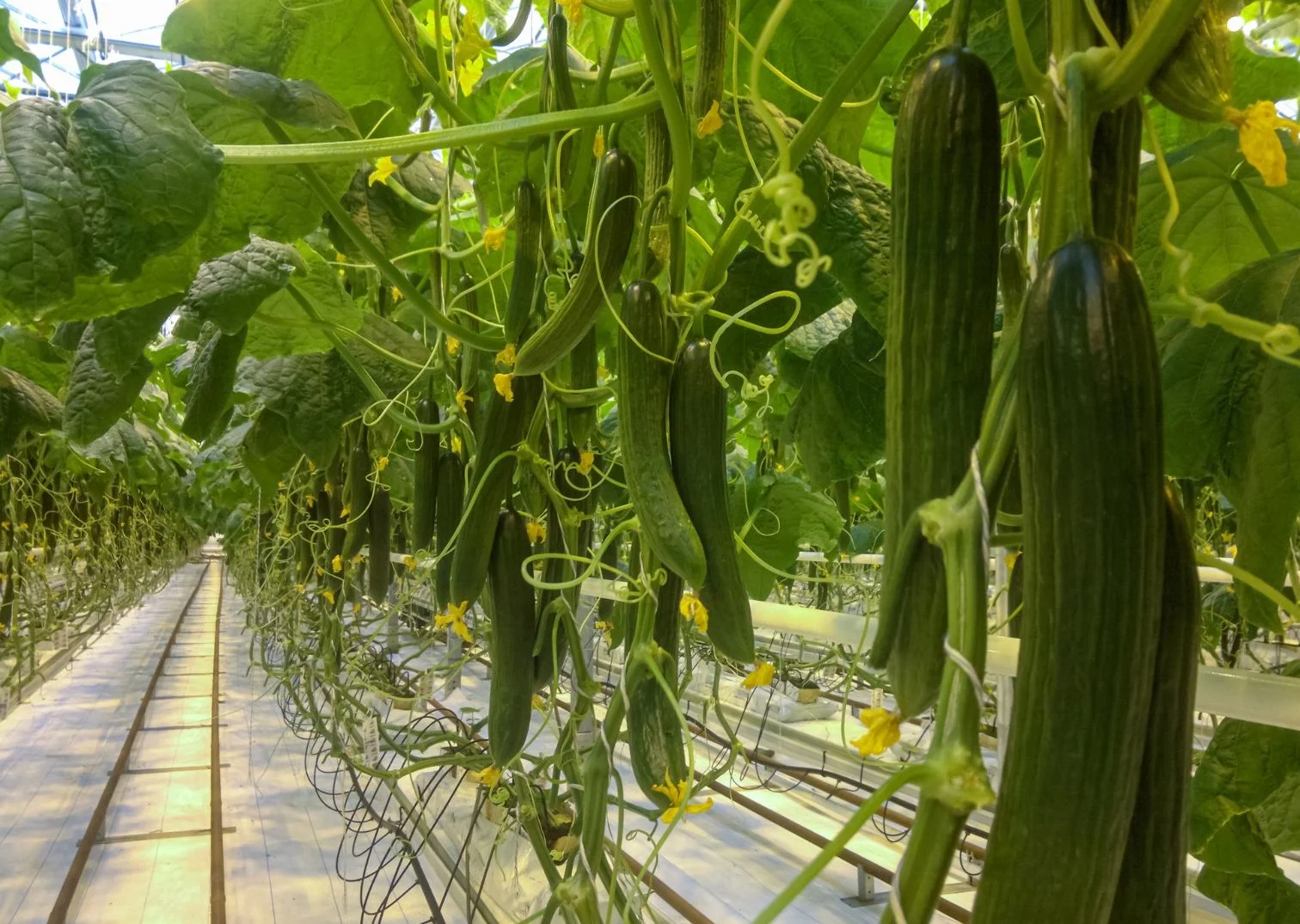
Crops · Fruiting vegetable
Cucumber.
Schnell, zehrend und unnachsichtig gegenüber einem trägen Klima.
Start with the end product
A crop with a market.
Greenhouse cucumber cultivation combines a selected fruit type with a trained vine, managed root zone and repeated harvesting. Product grade, available light and the crop-replacement strategy shape the operation.
The fruit the buyer wants
Agree length, weight band, shape, colour and the acceptable grade. Long, midi, mini and snack are commercial categories; their specifications can overlap between buyers.
The unit you sell
A whole fruit, counted pack and pack sold by weight place different demands on grading. Smaller fruit does not automatically mean a shorter crop cycle or more revenue per greenhouse.
The delivery programme
Define the weeks and volume the customer needs. Include establishment and crop-change gaps before turning one crop’s performance into a supply promise.
Climate and season
Start with the growing conditions.
Choose the intended harvest period and location before deciding on heating, screens, ventilation or lighting.
Light and fruit load
The canopy must support both new growth and developing fruit. Match fruit retention, stem density and pruning to season and crop vigour. A small fruit type is not permission to overload the plant.
Temperature and humidity
Temperature influences crop development; moisture and condensation affect plant health. Ventilation, heating, screens and air movement need a coordinated strategy, including during crop establishment.
Water and the root zone
Drip irrigation follows the crop, weather and substrate response. Measure supply and drainage, monitor nutrient concentration and acidity, and design collection and treatment before reusing drain water.
A greenhouse changes the growing environment; it does not remove seasonal limits.
From layout to cultivation
Put the crop into a programme.
Use the selected layout to organise the next decisions. Dates and expected harvest need a crop adviser and a location-specific plan.
Specify the plants
Agree planting material, delivery stage and the nursery programme. Reserve any on-site space before setting the production layout.
Build the canopy
Check roots, irrigation and supports; train the crop for the selected system. A planting date is not the start of saleable harvest.
Pick and renew
Register growth, fruit load and grade. Plan harvest rounds and crop work alongside the next planting and its supply gap.
Prepare the next crop
Include crop removal, cleaning, system checks and replanting. Agree separate compartment programmes where supply needs continuity.
How to cultivate
Support the canopy.
Manage the roots.
The training system and root-zone system are separate choices. Match both to the crop and the people who will work with it.
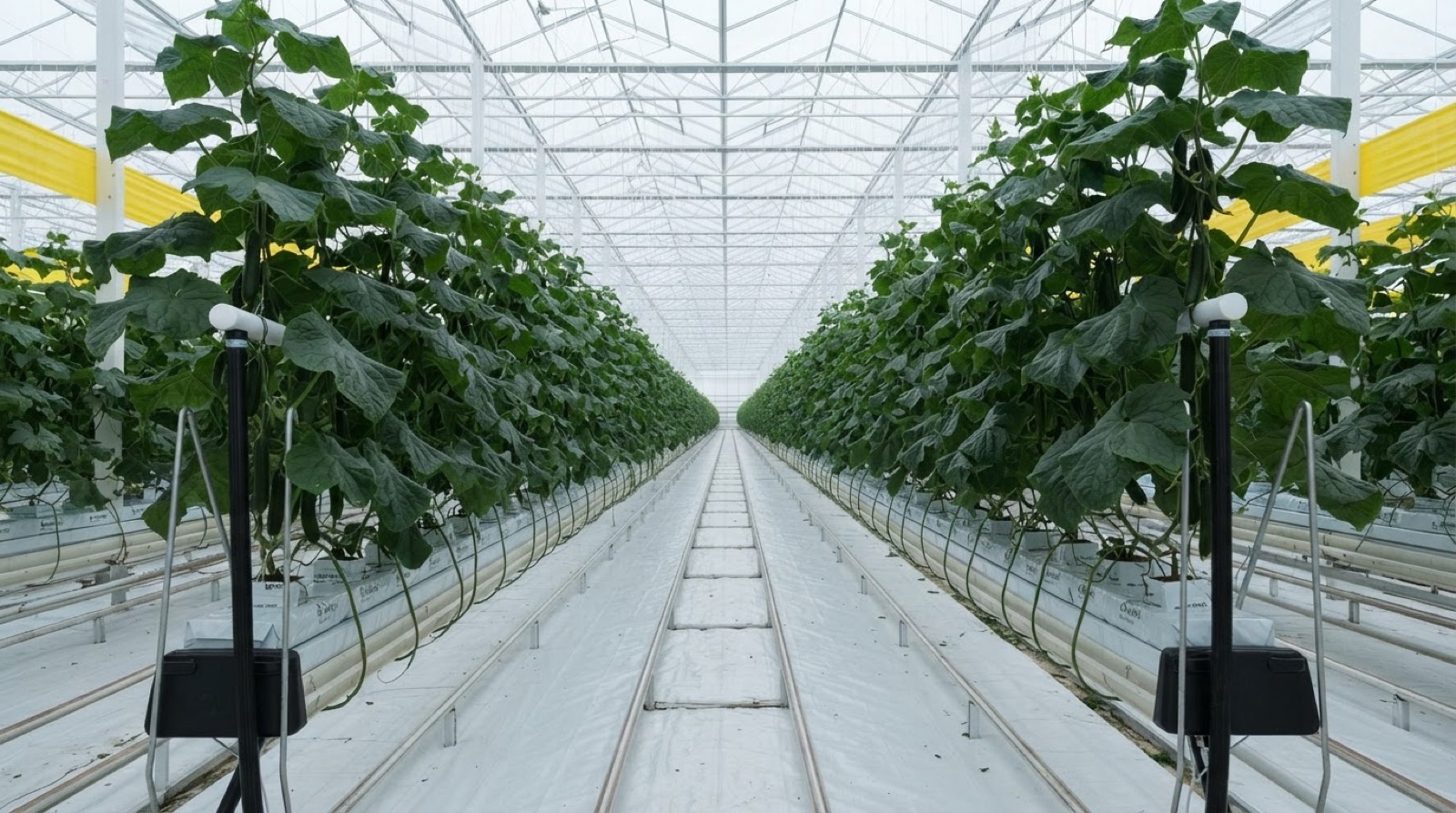
High-wire training
The main stem is supported on a string and progressively lowered as it grows. Side-shoot, leaf and fruit management keep the working canopy accessible. This creates a recurring task, with crop height, support loads and safe access to resolve in the greenhouse design.
Traditional / umbrella training
In a traditional system the plant reaches the crop wire and selected laterals develop from the top. It has a different canopy and labour pattern from high-wire lowering. Select the training route for the cultivar, season and available workforce; neither route is an automatic yield or labour winner.
Drip-fed substrate on gutters
Roots grow in a substrate such as stone wool or coir. Drippers supply nutrient solution; a gutter supports the root-zone system and collects drainage. The roots do not float in the gutter. Substrate choice, slab or container volume and irrigation must be designed together.
Soil cultivation and organic production
Soil-grown crops need their own bed, drainage, soil-health and rotation plan. Trellising is still needed. Organic is a production and certification route, not a synonym for growing in soil; local requirements and permitted inputs need checking.
Fruit set, hygiene and crop changes
Commercial seedless greenhouse types are commonly parthenocarpic: they can set fruit without fertilisation. Do not copy a tomato pollination plan into this crop. Confirm the selected cultivar’s requirements, use clean planting material, scout the crop and plan cleaning between plantings.
The people and the systems
Make the daily work possible.
Match crop care, harvest and packing capacity to the growing programme.
Train and inspect
Plan regular clipping or twisting, pruning, fruit-load management and, for high wire, lowering. Access and staff skill matter as much as the support hardware.
Pick to specification
Inspect frequently and pick to the agreed size and grade. Gentle handling, grading and packing preserve quality; growing every fruit larger is not the objective.
Replace and restart
Allow time to remove the crop, clean and prepare the system, receive plants and establish the next crop. Separate compartments can support staggered programmes, with their own hygiene and climate arrangements.
Welche cucumber?
Die Handelstypen.
Häufiges Pflücken. Gleichbleibende Fruchtklasse. Der Handelstyp, den Sie verkaufen, bestimmt Pflanzenlast, Ernterhythmus und das Gewächshaus.
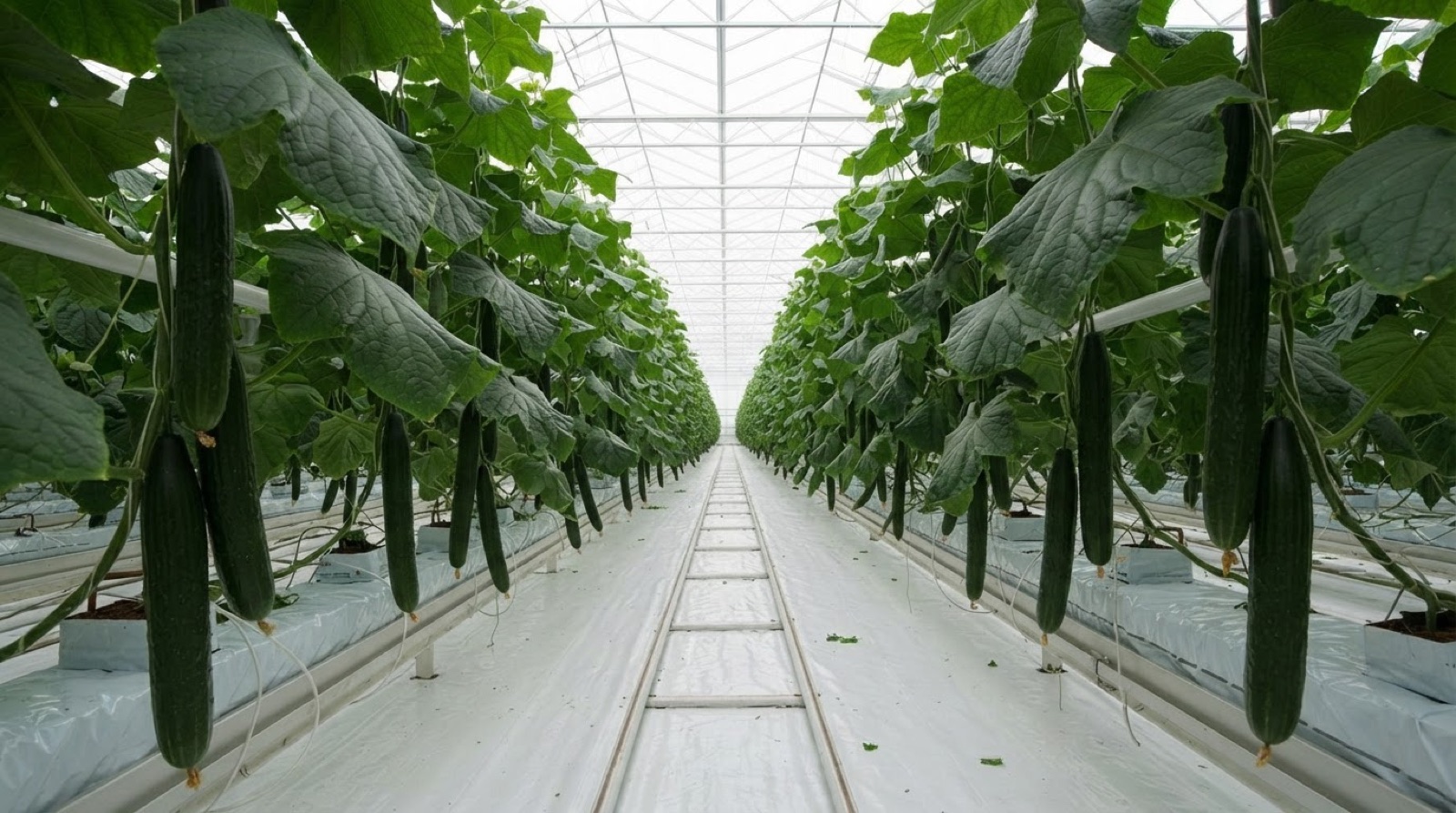
Long Cucumbers
Long cucumber is the classic Dutch glasshouse cucumber, sold by the piece to a tight length and straightness grade.
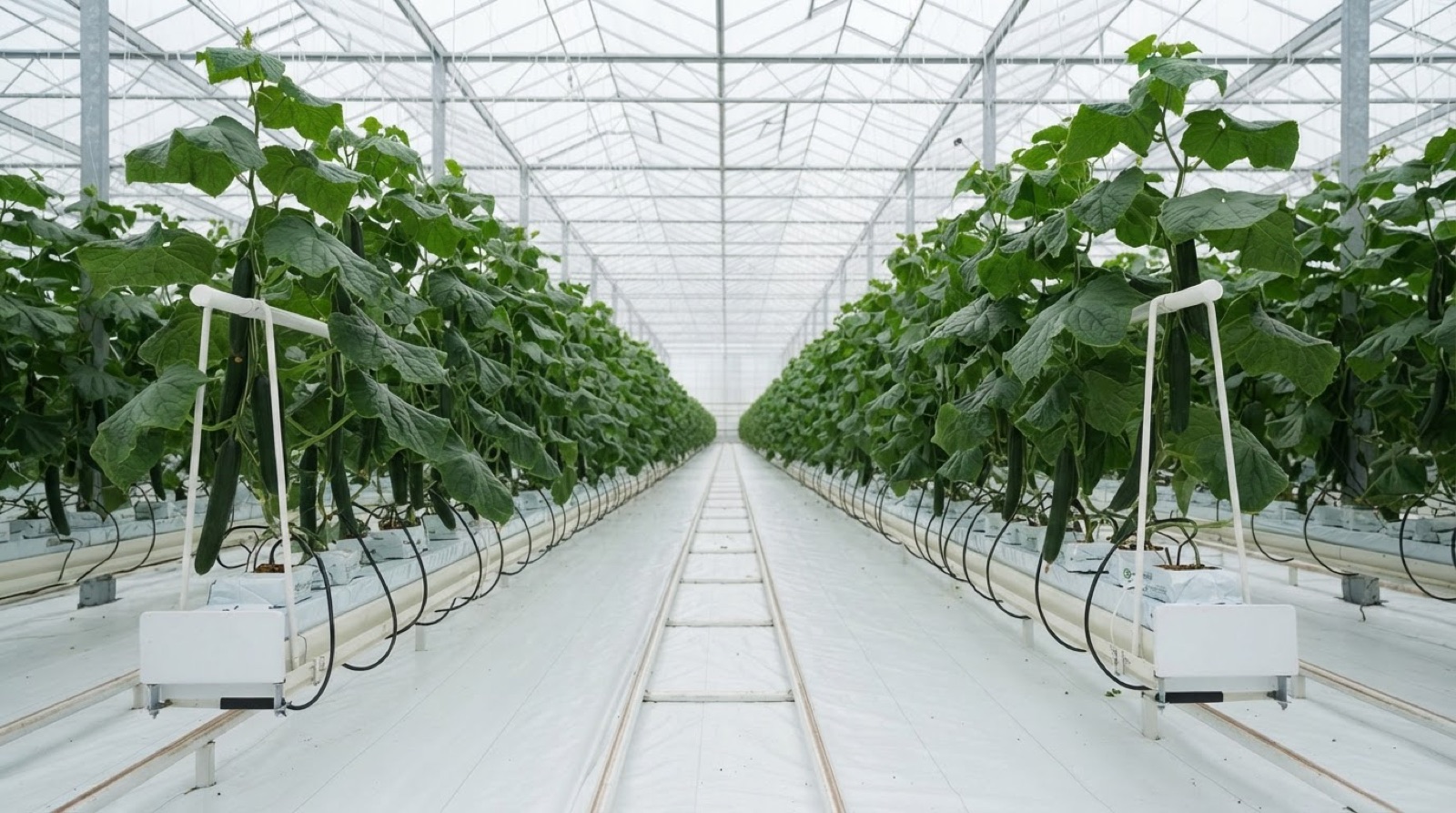
Midi Cucumbers
Midi cucumber is a separate pack format with its own cultivars, fruit count and picking labour.
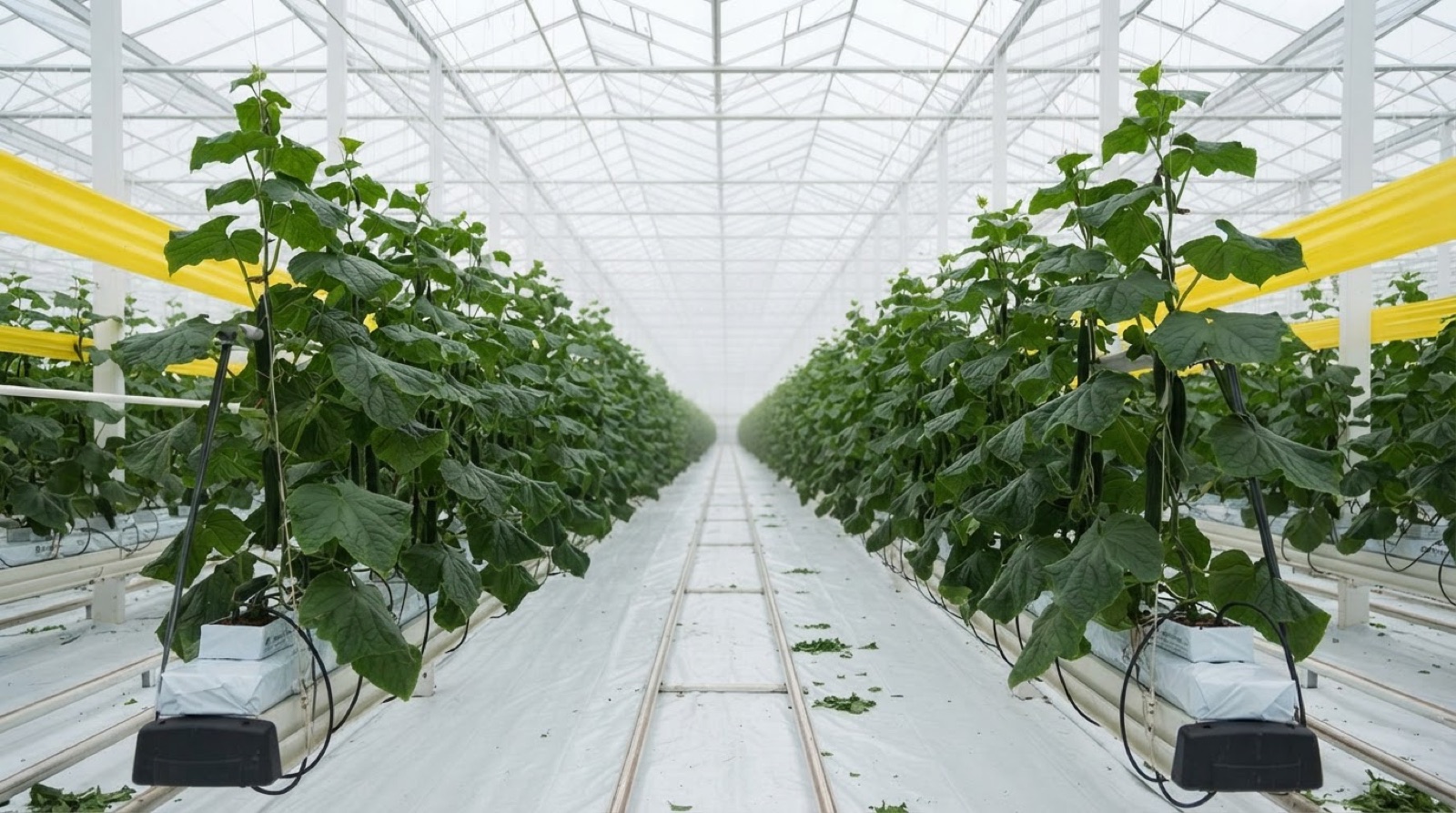
Mini Cucumbers
Mini cucumber is picked often, and pick frequency shapes the layout of the greenhouse.
Snack Cucumbers
Snack cucumber runs a short cycle, which makes scheduling the design question.
Die Gurke wächst schneller als jedes andere Fruchtgemüse im Gewächshaus, und diese Geschwindigkeit ist das kommerzielle Argument für sie. Die Frucht setzt an und füllt sich in Tagen statt in Wochen, sodass ein Gewächshaus mehrere Kulturen im Jahr fahren und auf einen Markt reagieren kann, statt sich auf einen langen Zyklus festzulegen. Dieselbe Geschwindigkeit ist das Risiko: Die Kultur zeigt einen Klimafehler fast sofort, und es bleibt wenig Zeit, eine stockende oder überladene Pflanze zu korrigieren, bevor es sich in der Sortierung niederschlägt.
Was die Kultur braucht
Die Pflanze wächst auf Substrat und wird am Hochdraht geführt, wie die Tomate, doch ihr Bedarfsprofil ist schärfer. Die Transpiration ist hoch, die Frucht besteht überwiegend aus Wasser, und die Pflanze wirft Lasten ab, die sie nicht tragen kann. Feuchteregelung und Bewässerungskapazität wiegen deshalb schwerer als bei einer langsameren Kultur, und das Klimasystem wird auf Spitzen statt auf Mittelwerte ausgelegt.
Was die Sorten unterscheidet
Die Handelstypen werden nach Fruchtlänge und -masse getrennt — Schlangengurke, Midi-Gurke, Mini-Gurke und Snackgurke — und diese Kategorien haben sich mit der Züchtung im Lauf der Zeit verschoben. Ein Etikett allein bestimmt ein Produkt nicht mehr, weshalb ein Projekt gegen eine benannte Sorte statt gegen eine Kategorie spezifiziert wird. Der Typ entscheidet über Packformat, Ernteaufwand und Preis, und jedes davon wird für die tatsächlich angebaute Kultur geplant.
DutchGreenhouses® plant Konstruktion, Klima, Schirmung und Bewässerung um den Gurkentyp, seinen Zyklus und das lokale Klima herum, sodass das Gewächshaus die Spitzenlast der Kultur tragen kann und nicht nur ihren Mittelwert. Nehmen Sie Kontakt auf, um ein Gurken-Gewächshaus zu planen.
Das Gewächshaus hinter gurken
Gurken unter Glas.
Hochdrahtkultur auf Substrat
Bewässerung, Feuchteführung und Erntezugang auf eine schnell wachsende Kultur abstimmen.
Häufiges Pflücken. Gleichbleibende Fruchtklasse.
Hochdrahtkultur auf Substrat.
Den Absatzplan auf Fruchtklasse, Stückzahl und Erntehäufigkeit aufbauen.
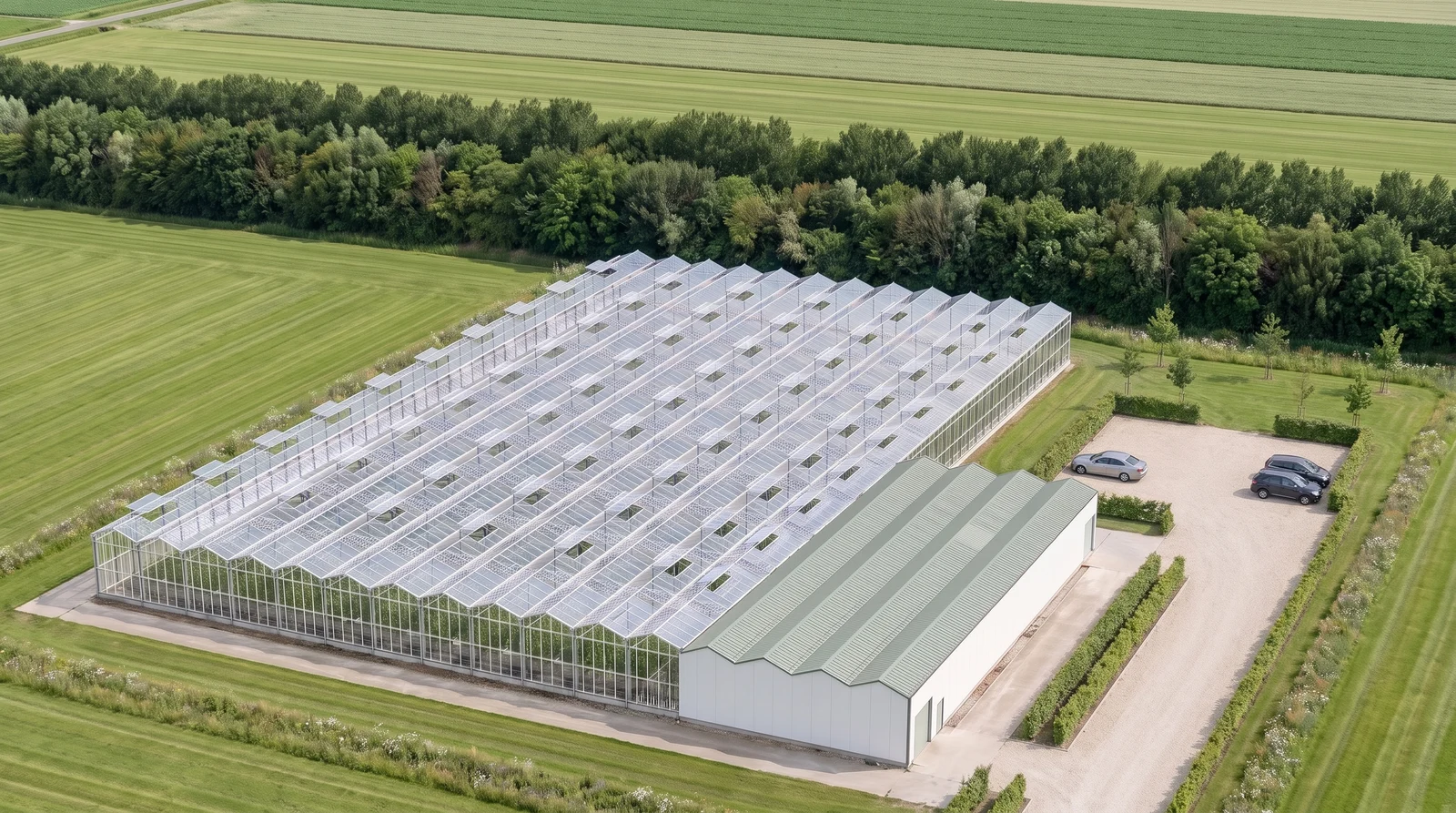
Expert Hydroponic Greenhouse Series
Eine definierte Konstruktion für die kommerzielle Hydroponik. Die Kultur bestimmt Kultursystem, Klimastrategie und Ernteanordnung.
½ acre1 acre2 acresEntdecken Expert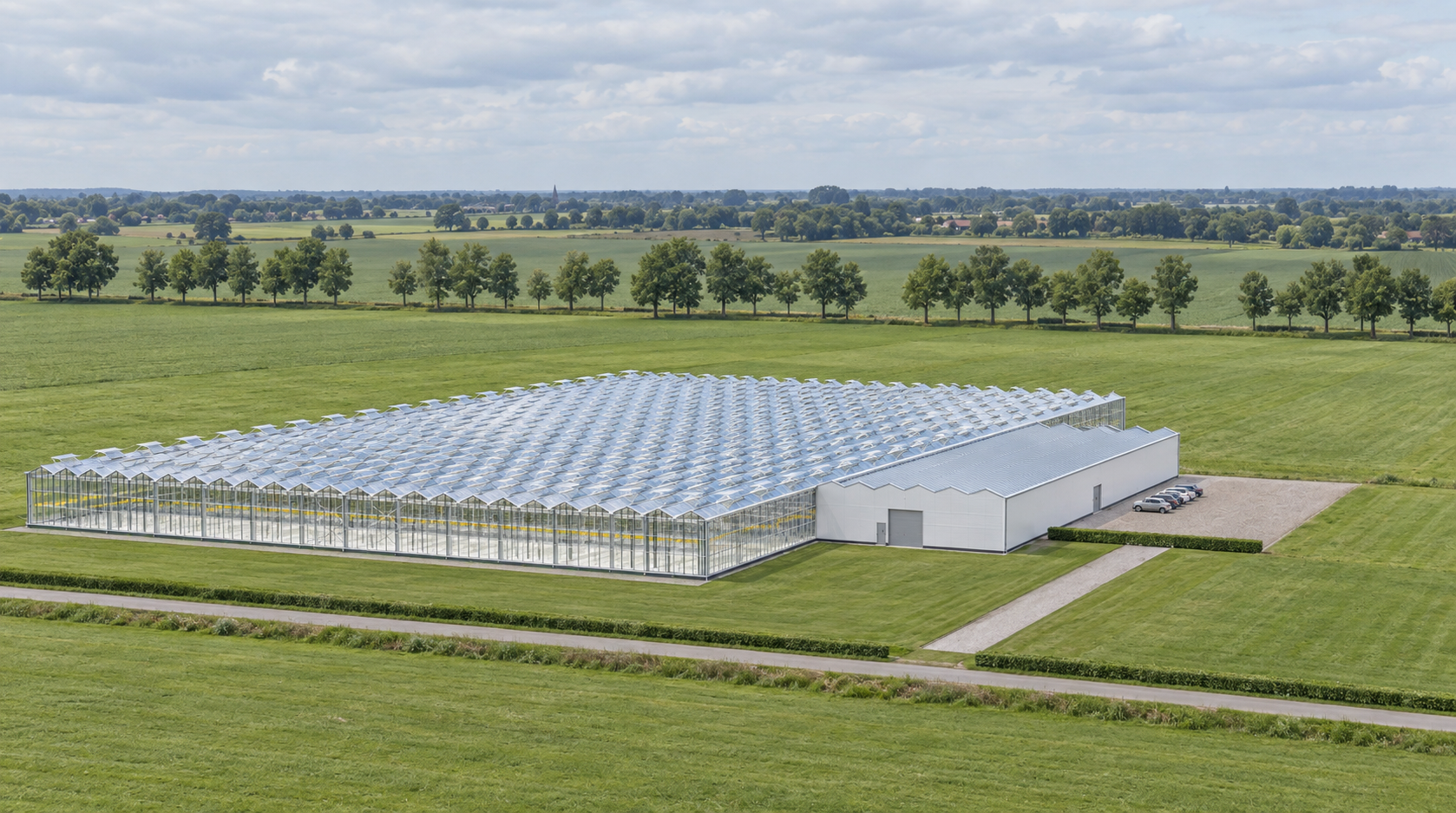
Plus Hydroponic Greenhouse Series
Unsere größte Standardserie. Die größere Kulturfläche auf Kulturbedarf, Arbeitskräfte, Versorgung und den Markt abstimmen, den Sie beliefern wollen.
2 acres4 acres8 acresEntdecken Plus4,032 m²43,400 sq ft Kulturfläche sind der übliche Ausgangspunkt für einen Produktionsplan mit gurken (GrowPro Expert 1 acre). Alle neun Modelle vergleichen
Bringen Sie Ihre nächste Ernte
unter Glas.
Ihre Kultur, Ihr Standort und die Menge, die Sie verkaufen wollen. Finden wir das passende Gewächshaus und die passenden Systeme.
Ein individuelles Gewächshaus gesucht?GrowPro Expert
Wir können auch für eine andere Kultur oder ein gemischtes Anbauprogramm planen.
Über Ihr Projekt sprechen Weiter zum Kontaktformular. Unverbindlich.Lesenswertes, das Sie interessieren könnte

Grow Like a Pro: Starting Smart, Growing Strong
How Grow Like a Pro combines smart farming, CEA technology and local partnerships for eco-friendly, profitable, pesticide-free greenhouse…
Artikel lesen
Maryland Cannabis Greenhouse: Year One
One year on: how the Maryland cannabis greenhouse, paired with an adjacent indoor facility, cut the energy bill and lifted both yields and…
Artikel lesen
The Case for a College Greenhouse
Why a college greenhouse belongs in the curriculum: teaching science, craftsmanship, business logic and sustainability, and preparing…
Artikel lesen
The Case for a High School Greenhouse
Why every high school greenhouse matters: how it makes STEM tangible, builds responsibility and teamwork, and helps students discover their…
Artikel lesen
Greenhouses in Education: The Case for Schools
Greenhouses in education reconnect students to reality — the full case for why every school, high school, college and trade program should…
Artikel lesen
The Origins of Greenhouse Horticulture: My Backyard
A tour through greenhouse horticulture history: from 19th-century Westland fruit walls to the “City of Glass” and today’s international…
Artikel lesen